When Cole Palmer scored twice in the first half against Paris Saint-Germain at MetLife Stadium on July 13, 2025, he settled one argument at least. Chelsea won 3-0, and the newly expanded Club World Cup had a champion that nobody had picked at the start. Whether the tournament itself was a good idea, after a month of half-empty stadiums, midday kick-offs in extreme heat and some of the best football of the year, was a different argument, and it is still going on.
Where it came from
For decades the club champions of Europe and South America met once a year in the Intercontinental Cup, played in Tokyo from 1980 to 2004. FIFA held its first Club World Championship in Brazil in 2000, won by Corinthians, and from 2005 replaced the Intercontinental Cup with an annual Club World Cup. That event brought together the champions of each continent plus a club from the host country, usually in Japan, the United Arab Emirates or Morocco, for a short tournament in December.
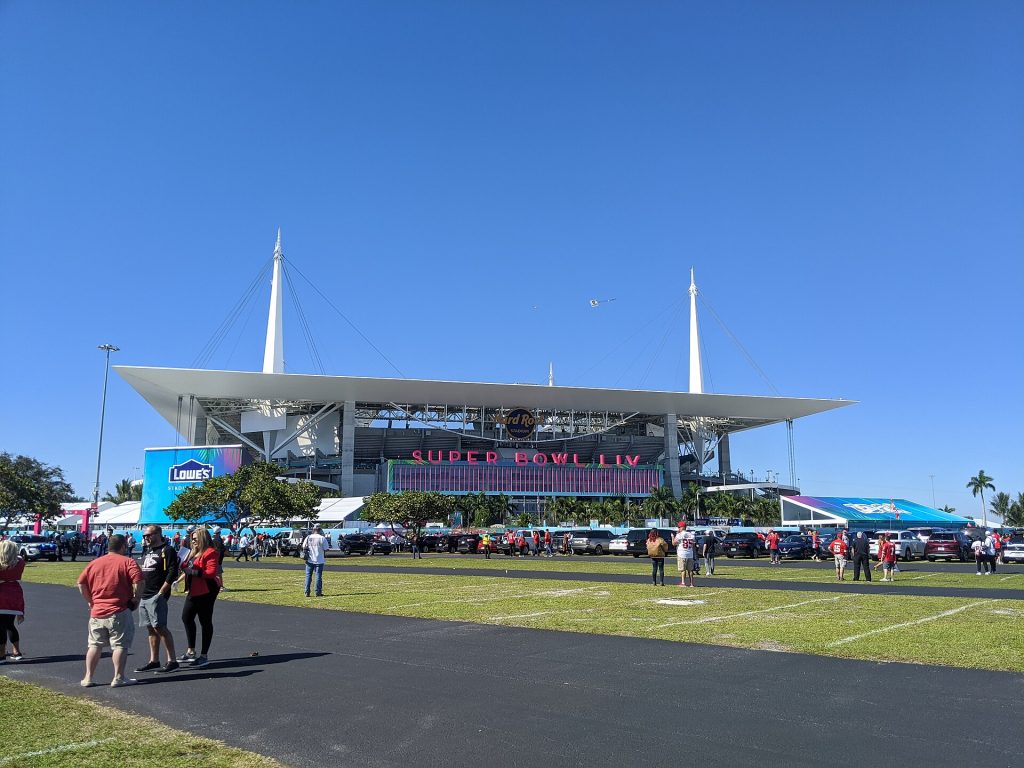
The European champions almost always won. Between 2007 and 2023, only one South American club, Corinthians in 2012, beat them to the trophy. Many fans in Europe treated it as an afterthought.
The new format
FIFA president Gianni Infantino wanted a club competition to stand alongside the World Cup. In 2025 he got it: a 32-team tournament held every four years, played in the summer like the World Cup. The first edition was held in the United States from June 14 to July 13, 2025, in 11 cities.
The format copies the old 32-team World Cup. The clubs are drawn into eight groups of four, each plays the other three once, and the top two in each group go into a 16-team knockout bracket of single matches, with extra time and penalties if needed. There is no third-place match.
Who qualifies
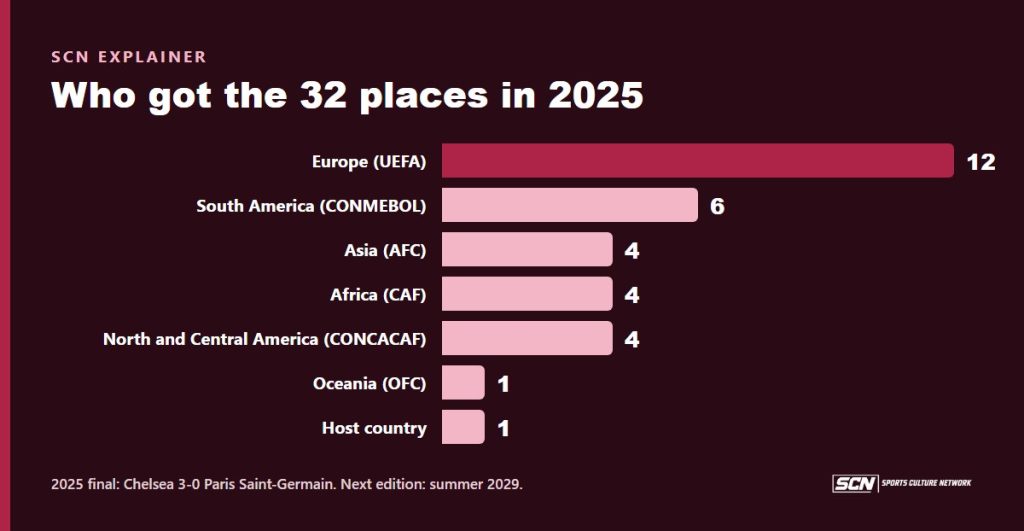
Places are shared out by confederation. For 2025, Europe had 12, South America six, Africa, Asia and North and Central America four each, Oceania one, plus one place for a club from the host country.
Within each confederation, the champions of its main continental competition over the previous four seasons qualified automatically. The remaining places went to the highest-ranked clubs over the same period. No country could have more than two clubs unless more than two had won their continental title. That rule left out Liverpool, Barcelona and Arsenal, among others, while Red Bull Salzburg and Auckland City got in.
The host place went to Inter Miami, which FIFA picked as the winner of MLS’s Supporters’ Shield in 2024, an award that guaranteed the tournament Lionel Messi.
The money
FIFA put up prize money of $1 billion, the biggest ever for a club competition. Every club received a fee simply for taking part, scaled by continent and commercial value, plus payments for each win and draw and for every round reached. Chelsea earned more than $100 million in total. For clubs from smaller leagues, a single win was worth more than a season of domestic prize money. The broadcast rights went to the streaming service DAZN, which showed every match for free worldwide.
What happened in 2025
The tournament produced a series of upsets and great nights for clubs outside Europe. Al-Hilal of Saudi Arabia beat Manchester City 4-3 after extra time in the round of 16. Brazil’s Fluminense reached the semi-finals. Botafogo beat PSG in the group stage. South American fans, travelling in huge numbers, gave several games the atmosphere the empty seats elsewhere lacked.
The problems were real too. Many matches were played at noon or in the early afternoon to suit European television, in heat that often passed 30C, and players and coaches complained. Storm delays interrupted several games. Attendances ranged from sell-outs to crowds of a few thousand in stadiums built for 70,000, and ticket prices were cut sharply for some games. Players’ unions argued the tournament was one more burden on a calendar that already left the top players with almost no summer break.
In the final, Chelsea outplayed a PSG team that had just won the Champions League. Palmer scored twice and set up a third for João Pedro. Chelsea had qualified as the 2021 European champions.
The Intercontinental Cup
The old annual event did not disappear entirely. Since 2024, FIFA has staged an annual Intercontinental Cup in December, in which the reigning European champions play the winner of a play-off between the champions of the other continents. Real Madrid won the first edition in Qatar. It is a small tournament, a few games in one country, and it keeps a world club title on the calendar in the years between the big tournaments.
What comes next
The next Club World Cup is due in the summer of 2029. FIFA has not yet confirmed the host. Reports have named the United States again, a joint bid involving Morocco, Spain and Portugal ahead of their 2030 World Cup, and Qatar, possibly in winter, as contenders. There has also been talk of expanding the field to 48 clubs.
The arguments will follow it. European clubs and leagues want guarantees about the calendar, players want time off, and FIFA wants the tournament to grow. For the clubs that took part in 2025, though, especially those from outside Europe, it was a rare chance to play the giants of the game in a competitive match, and some of them won.
Follow club football around the world in our football coverage, browse squads in our clubs directory, and read how the World Cup works and how the Champions League works.