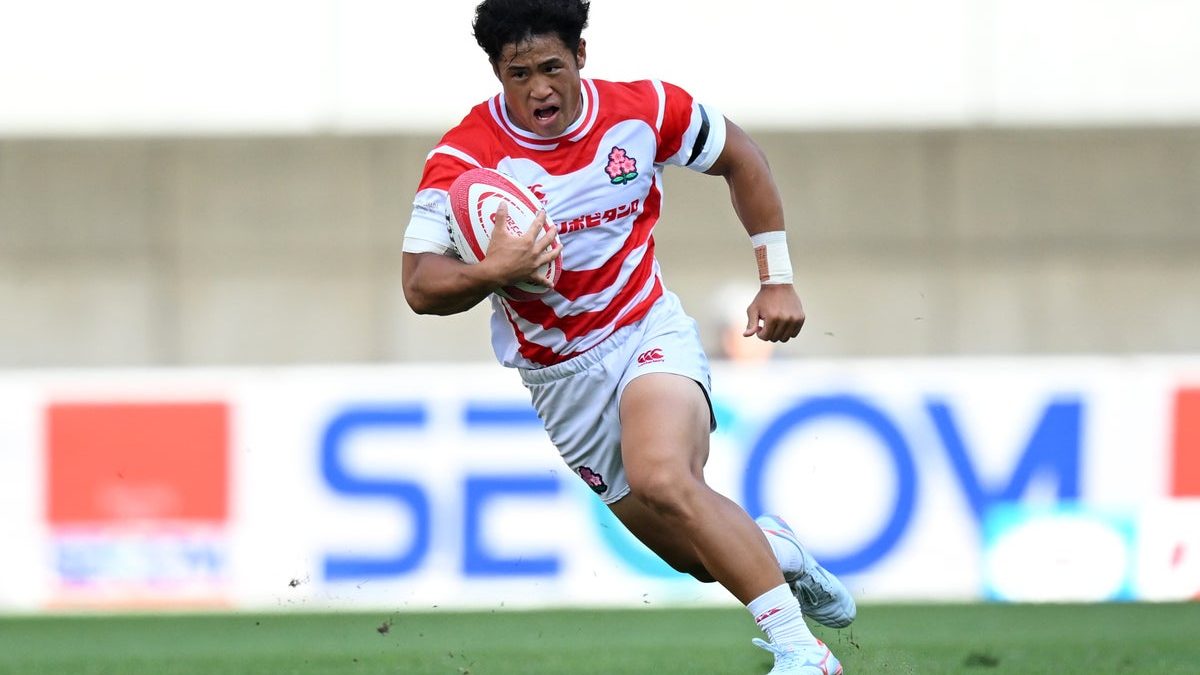
Ryunosuke Ito, Japan’s 21-year-old fly half widely seen as their emerging star, will miss the upcoming match against England because of a longstanding team hierarchy that requires him to return to university rugby rather than stay with the national squad. Instead of joining his teammates in the United Kingdom, Ito is set to play for Meiji University while the Japan side faces England with Riku Kitahara at fly half.
Head coach Eddie Jones confirmed the absence after the recent defeat to Fiji, expressing frustration at the situation. “He’s the only 10 for a tier one nation in the world who has to go and play for an amateur team now,” Jones said, drawing a parallel to baseball superstar Shohei Ohtani, imagining the absurdity if he had to return to university baseball. Ito’s omission is not due to injury but a reflection of Japan’s unique development system, where players typically delay their senior club debuts until their mid-20s.
Ito’s rise has been notable. He was named to start against France before playing a senior club game and quickly became Japan’s preferred fly half through the Nations Championship, the Australia series, and the Pacific Nations Cup. With Yu Tamura’s retirement and Lee Seung Sin injured, Ito appeared to be the natural successor. Kitahara, who replaced him against Wales in Cardiff, performed reasonably well but is reportedly Jones’s fourth choice at fly half.
Jones has indicated the need for Japan to adopt unorthodox tactics to challenge England. Speaking after the Wales loss, he said, “If we play an orthodox game of rugby, we’re probably going to struggle to beat them. And the English don’t react well to unorthodox rugby. We’ve got to think about how we can play quite unorthodoxly.” This approach echoes Jones’s experience with England being unsettled by Italy’s radical ruck tactics during the 2017 Six Nations.
Japan’s rugby pathway contrasts sharply with many top-tier nations. The country’s system resembles that of the NFL, with a strong emphasis on education and life after rugby. Players like former wing Kenki Fukuoka, who retired at 28 to pursue a medical career, exemplify this model. On average, Japanese players make their senior club debuts about three years later than counterparts in countries like England.
This approach creates challenges for the national team, especially as they try to compete against established rugby powers. The decision to send Ito back to university rugby while the rest of the squad competes in Europe illustrates the tension between player development and international demands.
Japan’s squad against Wales showed the influence of international recruits who have integrated well. Dylan Riley, born in South Africa and educated in Australia, has been a strong centre since joining the Saitama Wild Knights in 2018. The second-row pairing of Warner Dearns and Harry Hockings adds physicality and leadership. Dearns, born in Wellington, was arguably the best lock in Super Rugby Pacific during a title-winning season with the Hurricanes and rejected a chance to switch to the All Blacks, citing his loyalty to Japan after growing up there.
The Japan Rugby League One is also preparing changes for the next season, adjusting eligibility rules for international players. These could limit opportunities for overseas-born players and naturalised citizens, a factor that may have influenced several Springboks returning to South Africa recently.
Jones’s squad for the England clash reflects the ongoing balancing act in Japanese rugby between nurturing homegrown talent, managing educational commitments, and integrating international imports. Ito’s absence is the latest example of these competing priorities affecting team selection ahead of a high-profile test match.
According to Yahoo Sports.