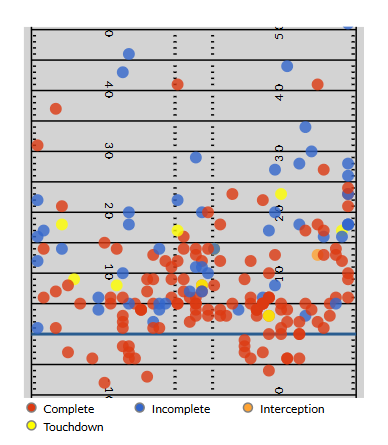
C.J. Stroud has emerged as the driving force behind the Houston Texans’ offense this season, pushing the team back into playoff contention despite a shaky 2-4 start. The Texans have recently won consecutive games against divisional rivals, showing signs of an offense regaining momentum under Stroud’s leadership.
The Texans arrived in 2026 with expectations high for their defense, which returned nearly all starters and added new talent to fill gaps. However, their defense has performed at an average level so far, struggling with contested catches and injuries, particularly at linebacker. While Will Anderson Jr. continues to impress as a frontrunner for Defensive Player of the Year, the unit has surrendered big plays to top quarterbacks in the AFC, including Joe Burrow, who was held to his second-lowest success rate in a game during Houston’s week 2 matchup.
Offensively, the Texans have wrestled with a weak running game. Their running backs have a rushing success rate of just 29.4% on early downs, ranking 25th in the league, though this represents a slight improvement over previous years. The team still faces many third-and-long situations, averaging 7.1 yards to convert, which is better than their 7.4-yard average over the past three seasons.
What has changed dramatically is Houston’s passing attack. Under offensive coordinator Nick Caley, now in his second season, the Texans have reduced their reliance on early-down runs, dropping their designed run rate from 45.9% over 2023 to 2025 to 37% this year. They are also using fewer condensed formations, down to 40.2% from nearly 50% last year and 56.6% in 2024.
Stroud has flourished with this more open offensive design, which allows him to diagnose defenses quickly and throw from a spaced-out formation. He ranks fifth in dropback success rate and sixth in explosive pass rate this season. He leads the NFL in passes between the numbers and in air yards relative to the first down marker, averaging 1.2 yards beyond the sticks, well above both his career average and the league average.
Stroud’s passing isn’t random; he has been aggressive but precise, making quick decisions without relying heavily on play-action. Despite the Texans’ inconsistent offensive line, he has been under pressure on only 11.4% of his dropbacks, ranking third in the NFL. Remarkably, he has not taken a sack against the blitz and holds the highest combined success and explosive play rate against blitzes among quarterbacks, while also experiencing the lowest hit or sack rate in those situations.
His ability to read blitzes and react swiftly has been evident in recent performances. Analyst Nate Tice shared clips from Houston’s game against the Tennessee Titans, illustrating how Stroud consistently finds passing lanes against aggressive defenses.
While the Texans’ defense has faltered somewhat and the running game remains below average, Stroud’s efficiency and the offense’s willingness to throw have helped Houston claw back into playoff contention. The team now faces a more manageable schedule in the coming weeks, which could further boost their chances.
The Texans’ renewed offensive identity under Stroud and Caley contrasts with past seasons, emphasizing quick reads and spacing over condensed formations and run-heavy play. Stroud’s statistics place him among the league’s top passers, and his performance has answered early doubts about his worth as the franchise quarterback. For Houston, the quarterback’s resurgence has provided a foundation for growth despite the uneven start to the season.
According to Yahoo Sports.