104 Matches Played in Record-Breaking 2026 World Cup
The 2026 World Cup was the biggest tournament yet, with a record 104 matches played, the most ever. The competition, which was won by Spain after they beat defending champion Argentina, set records for viewership and attendance with 6.8 million people watching a match in person.
Populous, a renowned design and architecture firm based in Kansas City, was tapped to prepare all 16 of the stadiums for this summer's tournament. The company has worked with FIFA on 10 World Cups between the men's and women's competitions.
The process of preparing the stadiums involved what is called "overlay," where a stadium design is placed on top of an existing venue. This includes fencing, tents, generators, trailers, signage, and other reconstructive elements to prepare for transportation, broadcast, fan experience, and the match itself.
According to Jeff Keas, Populous' Senior Principal and Senior Event Architect, "Event overlay is as complex in its own way" as creating an entirely new venue. Keas was on site at SoFi Stadium when the process of switching out the artificial turf for natural grass was underway.
The change from artificial turf to natural grass was a significant one, requiring a carefully crafted product from experts at the University of Tennessee and Michigan State University. Keas described how the process involved more than just putting dirt on the ground, but also a drainage system and several layers of different soil.
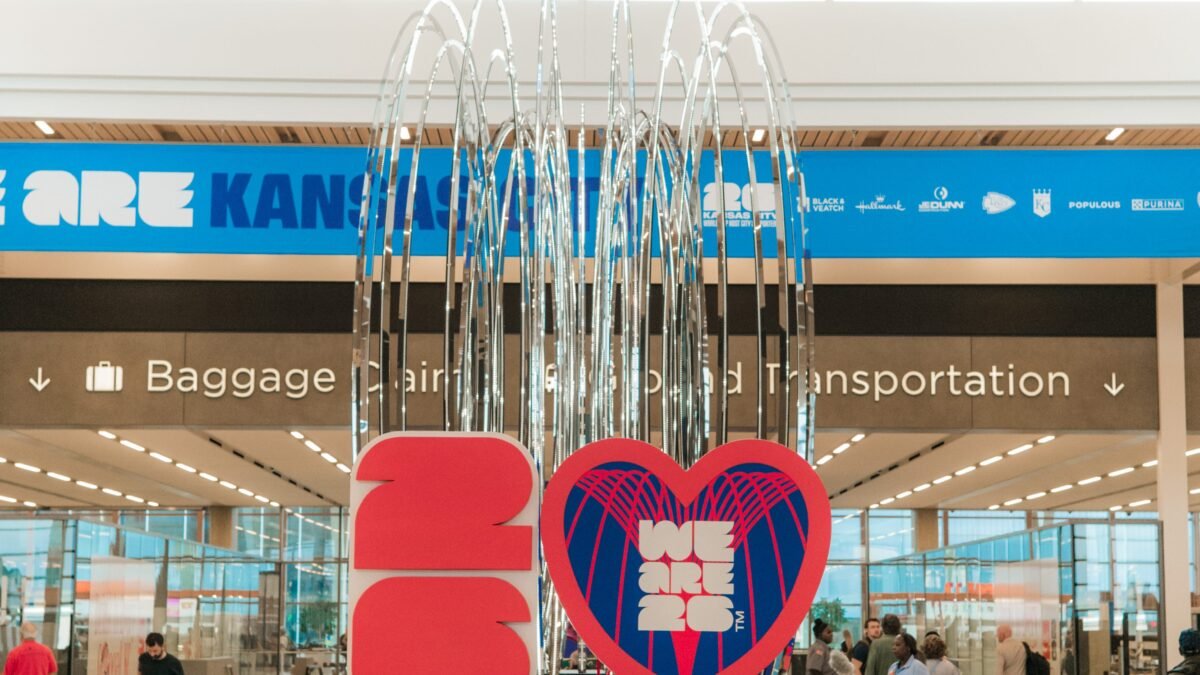
Meanwhile, Populous worked closely with KC2026 to create a welcoming, cohesive experience for the teams that played in Kansas City and their supporters. The company helped design and implement signage at the airport, wraps on bus stations, and showcased the Kansas City Streetcar.
Fan Fest, a free, family-friendly experience, and the more exclusive KC House for business networking were also created by Populous in collaboration with FIFA. The signage all presented a welcoming tone, even featuring clever sayings like, "We're happy you're here whether you came for the match or the misting fan."
The city of Kansas City had invested millions of dollars into its soccer facilities even before the World Cup, which allowed it to be the headquarters for four teams in the tournament. CPKC Stadium for the Kansas City Current was completed in 2024 and was the first stadium built specifically for a women's team.
Populous built Sporting Kansas City's training facility, Compass Minerals National Performance Center, which opened in 2018. This is where Lionel Messi and Argentina were based. According to Pam Kramer, CEO of KC2026, "It is amazing and one of the things we had hoped for was to really showcase to a global audience the vitality of our economy, our culture, the welcoming character of our people."
A favorite memory for the Populous team was the Netherlands' Oranje Fanwalk ahead of their group match against Tunisia. An estimated 36,000 fans flooded the streets of Kansas City walking up to the Fan Fest donning orange to celebrate their team. Kelly Holton, Senior Principal and Brand Activation Director for Populous, was "blown away" by the march.
The success of the 2026 World Cup in the United States has set a new standard for future tournaments. As the world looks to the next World Cup, the lessons learned from this summer's event will be crucial in delivering an even more memorable experience for fans.
Source: Yahoo Sports