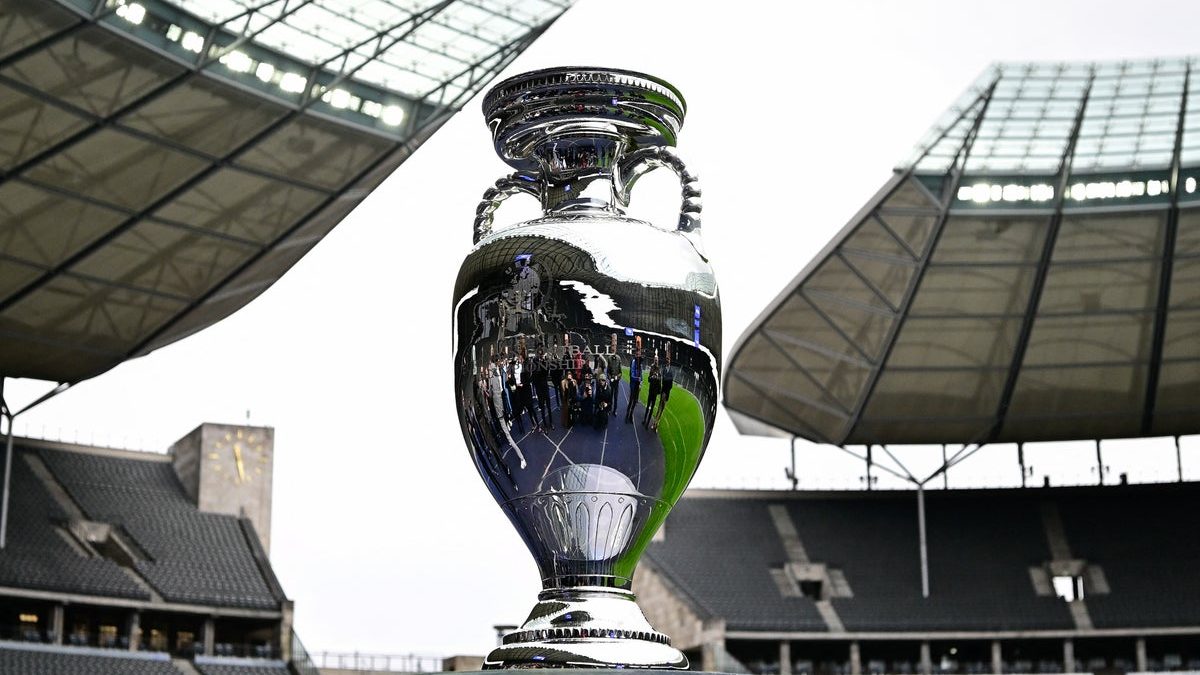
The draw for Euro 2028 qualifying will take place in Belfast on Sunday 6 December, setting the stage for a tournament hosted across England, Scotland, Wales and the Republic of Ireland. These four nations, despite being co-hosts, will enter qualifying as normal, with each needing to earn their spot through results rather than automatic qualification.
Unlike past tournaments where host countries qualified automatically, UEFA has introduced a safety net for Euro 2028. Two reserved spots will be available to co-hosts who fail to secure qualification by winning their group or finishing among the eight best runners-up. However, if three or more of the co-hosts miss out on qualification through their group performance, only the two with the best records will be granted these reserved places, leaving the others out of the tournament.
Northern Ireland will not be counted among the co-hosts since it will not stage any matches, even though it is part of the United Kingdom and will compete in qualifying. The qualifying draw will keep England, Scotland, Wales, Republic of Ireland, and Northern Ireland apart to improve their chances of qualification.
The qualifying format involves 54 UEFA teams drawn into 12 groups. Groups A to F will have four teams each, while Groups G to L will have five. The 12 group winners will qualify automatically, followed by the eight best runners-up. Up to four additional places could be decided through play-offs, although that number could drop to two if co-hosts use the safety net places.
The Nations League quarter-finalists and play-off participants will be treated differently in the draw. Quarter-final winners will be placed in groups of four, while groups of five can include only one Nations League quarter-final loser or play-off team. This system aims to balance the groups depending on the teams' recent form.
At present, the Nations League quarter-finals feature Spain vs France, Norway vs England, Netherlands vs Portugal, and Belgium vs Germany. The semi-finals will see the winners of Netherlands/Portugal facing Spain/France, while Belgium/Germany will meet Norway/England. Meanwhile, the Nations League play-offs have Bosnia and Herzegovina vs Denmark, Hungary vs Serbia, Republic of Ireland vs Croatia, and Slovenia vs Wales in League A/B, with additional ties in League B/C.
England, one of the co-hosts, will not begin their Euro 2028 qualifying campaign until September 2027 if they advance to the Nations League Finals by beating Norway. Teams in groups of five not involved in Nations League quarter-finals or play-offs will start qualifying earlier, with matches scheduled in March and June 2027.
Several stadiums across the co-host nations will stage Euro 2028 matches. Wembley in London will host the final, repeating its role from Euro 2020, which was delayed until 2021 due to Covid-19. Other venues include Cardiff, Glasgow, Dublin, Birmingham, Liverpool, Manchester, and Newcastle. The 24-team tournament will be spread across these cities.
The confirmed pots for the qualifying draw reflect current UEFA rankings and Nations League results. Pot 1 includes Belgium, Croatia, Denmark, England, France, Germany, Greece, Italy, Netherlands, Norway, Portugal, and Spain. Pot 2 features Austria, Bosnia and Herzegovina, Czech Republic, Hungary, Northern Ireland, Republic of Ireland, Serbia, Slovenia, Sweden, Switzerland, Turkey, and Wales. Scotland, placed in Pot 3 due to their third-place finish in League B of the Nations League, will be drawn alongside Albania, Georgia, Iceland, Israel, Kosovo, Montenegro, North Macedonia, Poland, Romania, Slovakia, and Ukraine.
The qualifying schedule spans from March to November 2027, with matchdays scattered across the calendar. Groups of five will start in March with four matchdays before the summer break, while the rest begin in September.
The decision to require co-hosts to qualify normally departs from previous tournaments but is balanced by the safety net of reserved places. How the four co-host nations will navigate their qualifying groups remains to be seen, especially with the complexities introduced by the Nations League impact on group formation. The draw in Belfast on 6 December will provide clarity on the paths these teams face toward Euro 2028.
According to Yahoo Sports.