





Dani Olmo has never followed the route most Spanish footballers take. While many young talents stayed at home hoping for a first-team chance, he left Spain as a teenager and built his reputation hundreds of miles away. It was a decision that surprised many people at the time.
Looking back, it changed everything. The years he spent away from Spanish football shaped him into an attacking midfielder who played with confidence, intelligence and the willingness to take responsibility when matches became tight.
Born on May 7, 1998, in Terrassa, Catalonia, Olmo grew up in a football family. His father, Miquel Olmo, worked as a coach, and the game was part of everyday life from an early age. He started playing for local club Espanyol before joining Barcelona’s La Masia academy, where he spent several years developing alongside some of the country’s brightest young players. Although his talent was clear, he made the bold decision to leave Barcelona in 2014 and sign for Croatian side Dinamo Zagreb while still only 16 years old.
Many questioned that move, but Olmo quickly proved it had been the right one. He progressed through Dinamo Zagreb’s youth system before making his first-team debut in 2015. Over the next few seasons, he became one of the club’s standout players, helping them win multiple Croatian league titles and domestic cups. His performances in European competition attracted attention from clubs across the continent. In January 2020, RB Leipzig signed him, giving him the chance to test himself in the Bundesliga. He settled quickly, becoming a regular starter and playing an influential role as Leipzig won two DFB-Pokal titles and the DFL-Supercup.
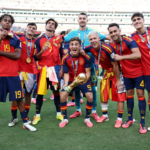
Olmo’s reputation continued to grow with Spain. He played a major part in the country’s victory at the 2019 UEFA European Under-21 Championship before becoming a regular in the senior national team. At UEFA Euro 2024, he delivered some of the finest football of his international career. He scored three goals during the tournament, including one against Germany in the quarter-finals, and finished among the competition’s leading scorers as Spain lifted the trophy. His performances earned praise from coach Luis de la Fuente, who trusted him in several attacking roles throughout the tournament.
After several successful seasons in Germany, Olmo returned to Barcelona in 2024, almost a decade after leaving La Masia. The move brought his career full circle. He arrived with far more experience than the teenager who had left in search of first-team football. Barcelona signed a player who had already won league titles in Croatia, domestic honours in Germany and the European Championship with Spain. Supporters welcomed him back knowing he had earned his place through performances rather than reputation.
Today, Olmo remains one of Spain’s most dependable attacking players. He is comfortable playing as an attacking midfielder, on either wing or behind the striker, giving his coaches different options during matches. Injuries have interrupted parts of his career, but whenever he has returned, he has shown the same calmness and technical quality that first attracted attention during his academy days. His career is a reminder that success in football does not always follow the traditional path, and his decision to leave Spain at 16 became the foundation for everything that followed.