When West Indies cruised to a 250-run chase in Ranchi with nine balls to spare, India’s pace attack came under intense scrutiny. The stunning run tally exposed the vulnerabilities of India’s bowling, struggling to contain batters averaging 11.46 runs an over across the T20I series. Head coach Gautam Gambhir was clear in his assessment: “These bowlers are our bowlers, not someone else’s bowlers. Their careers are at stake.”
Except for the match in Indore where India defended a total of 223 successfully, the hosts’ bowlers found it difficult to maintain control. Flat pitches, dew, and short boundaries combined to undermine India’s pace unit. The absence of Jasprit Bumrah and, to some degree, Hardik Pandya made matters worse, but the inconsistency of the younger quicks drew the most concern.
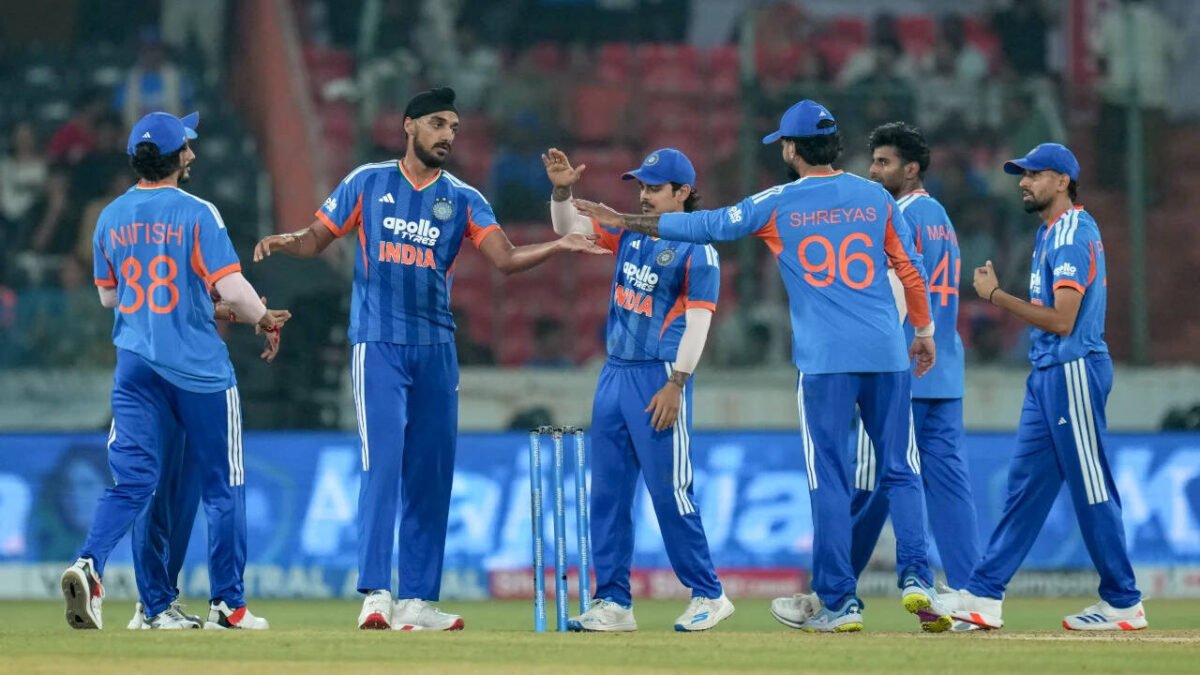
The series has seen Arshdeep Singh, Mayank Yadav, and Prince Yadav fluctuate between impressive spells and costly errors. Hyderabad’s fourth T20I highlighted their struggles. India conceded 18 extras, with 13 wides contributing heavily to the West Indies’ momentum. Arshdeep accounted for six wides, while Mayank and Prince gave away two and one respectively. Their attempts at wide yorkers or fuller deliveries frequently missed the mark, enabling West Indies’ batters to stay aggressive.
India’s lack of dependable T20 pace-bowling depth has become a headline issue. This has refocused attention on Bhuvneshwar Kumar, returning to the squad after almost four years. Kumar’s recent IPL performances, with 45 wickets in the last two seasons, have relied on accuracy and control rather than raw speed. Those qualities contrast with the young quicks’ erratic bowling in the West Indies series.
The conditions played against the bowlers throughout the series. High-scoring pitches and heavy dew meant even minor mistakes had large consequences. The physical and mental toll of a packed schedule was also noted by fast-bowling coach Morne Morkel. “We sometimes forget that mental fatigue plays a big part. We have to manage that and be smart with it. Some of the players went for the Asian Games and then straight into a full series against the West Indies. These guys are also human,” Morkel said.
He added that recovery and mental freshness are crucial for execution and skill. “Execution and skills become better when you’ve recovered, slept well and mentally refreshed. That’s a challenge. We’re going to New Zealand now and it’s a jam-packed schedule there as well.”
India’s upcoming tour of New Zealand presents different challenges. The pitches there may offer more assistance for bowlers, but the question is whether the Indian pace attack can quickly improve its consistency and adapt to the conditions.
One positive from the series was the performance of all-rounder Naman Dhir, who replaced Washington Sundar in the playing XI. His opportunity offered a glimpse of fresh options amid the bowling concerns.
As India prepare for New Zealand, their pace bowling remains under the microscope following the West Indies series. The team management faces pressure to find reliable combinations and sharpen execution ahead of the tougher conditions that lie ahead.
According to Yahoo Sports.