
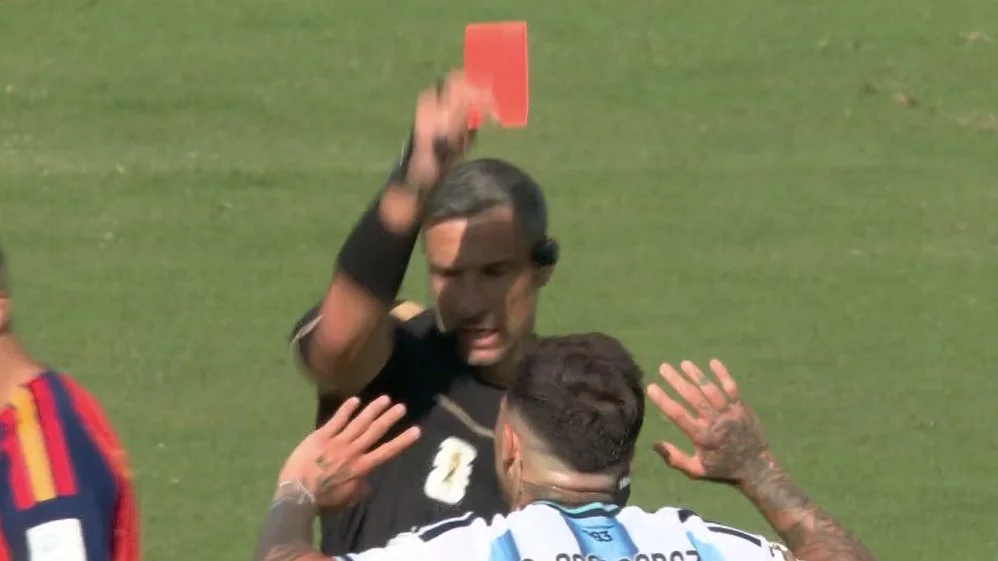
Enzo Fernández’s Red Card Sparks Controversy in FIFA World Cup Final
Argentina’s Enzo Fernández scored a crucial 85th-minute equalizer against England in the FIFA World Cup Final, but many fans are left wondering if he should have even been on the pitch.
The controversy stems from an earlier incident in the match where Fernández appeared to catch England’s Elliot Anderson in the head with his arm. Fans have been calling for a straight red card, with some even claiming Fernández should have been sent off earlier.
The incident has been widely discussed on social media, with many expressing their outrage and disappointment at the lack of a red card. “Disgrace”: Internet, England Fume As Argentina Escape Card Despite Nasty Tackle In FIFA World Cup Semi-Final, a news article by NDTV, sums up the sentiment. The article highlights the heated altercation between Argentina and England players in the opening minutes of their semi-final clash, with Fernández’s strong challenge on Anderson being a focal point.
In a video analysis by Hattrick Videos, the incident is broken down from multiple angles, leaving viewers to decide whether Fernández’s tackle was worthy of a red card. The video also raises questions about the referee’s decision not to award a penalty, despite Fernández’s clear foul on Anderson.
The debate surrounding Fernández’s red card has sparked a wider discussion about the fairness and consistency of refereeing decisions in the World Cup. With the FIFA World Cup Final being a high-stakes match, the pressure on referees to make accurate calls is immense.
The World Cup has a history of controversy surrounding red cards, with few players being sent off in the final match. In fact, only one player has gone on to lift the World Cup after being sent off in the final, as reported by Bleacher Report. The 1990 World Cup final between West Germany and Argentina is often cited as a prime example of “controversial artwork” and “world-wide ugliness”, as described by The New York Times.
The debate surrounding Fernández’s red card is unlikely to subside anytime soon, with many fans and pundits weighing in on the issue. The incident serves as a reminder of the high stakes and intense pressure that comes with refereeing in the World Cup.