Brighton & Hove Albion sit third in the Premier League and rank among Europe’s highest-scoring teams, despite being one of only two clubs, alongside Everton, to record a profit in transfer spending over the past five years. Their success comes from a data-driven recruitment and development strategy focused on young players rather than big-money signings.
“We have a really clear philosophy around how we can be competitive in arguably the most challenging league in the world,” Brighton sporting director Mike Cave told BBC Sport. The Seagulls’ 3-0 home win over reigning champions Arsenal before the international break showed how well that approach is working in practice.
Brighton’s model starts with analytics. Owner Tony Bloom’s Jamestown Analytics allows the club to monitor the performance of almost any player or coach in professional leagues worldwide. Cave said this system helps them identify talent efficiently and move fast in a competitive transfer market.
The exact workings of their analytics are closely guarded, but Cave explained it involves assessing various characteristics to find players who fit Brighton’s profile. “There’s no single attribute or a single metric that we particularly go after,” he said. “It’s more trying to assess a player’s performance and potential.” The club constantly reevaluates its data, using successes and failures to refine the way they interpret player information.
Brighton’s approach to recruitment is widely regarded alongside Brentford and Bournemouth as among the most successful in English football. But the club also puts emphasis on the character and background of players. “We invest a good amount of time in trying to understand the individual, the person, the human being,” Cave said. “Ultimately, this is a people industry.”
A significant part of Brighton’s strategy involves loaning out young players to gain experience before integrating them into the first team. Since 2018-19, the club has made more than 20 loan deals each season, including 27 last campaign and 16 so far this summer.
Cave described this pathway as “really productive and successful.” Players like Alexis Mac Allister, signed for £6.8 million in January 2019 and immediately loaned back to Argentinos Juniors and Boca Juniors, only became part of Brighton’s first team in 2020. Mac Allister went on to make 112 appearances before transferring to Liverpool for £35 million.
Jan Paul van Hecke followed a similar trajectory. Signed from NAC Breda for £6 million at age 20 in 2020, he spent two seasons on loan with Heerenveen and Blackburn Rovers. After 131 matches for Brighton, van Hecke was sold to Tottenham Hotspur for £52 million in the summer.
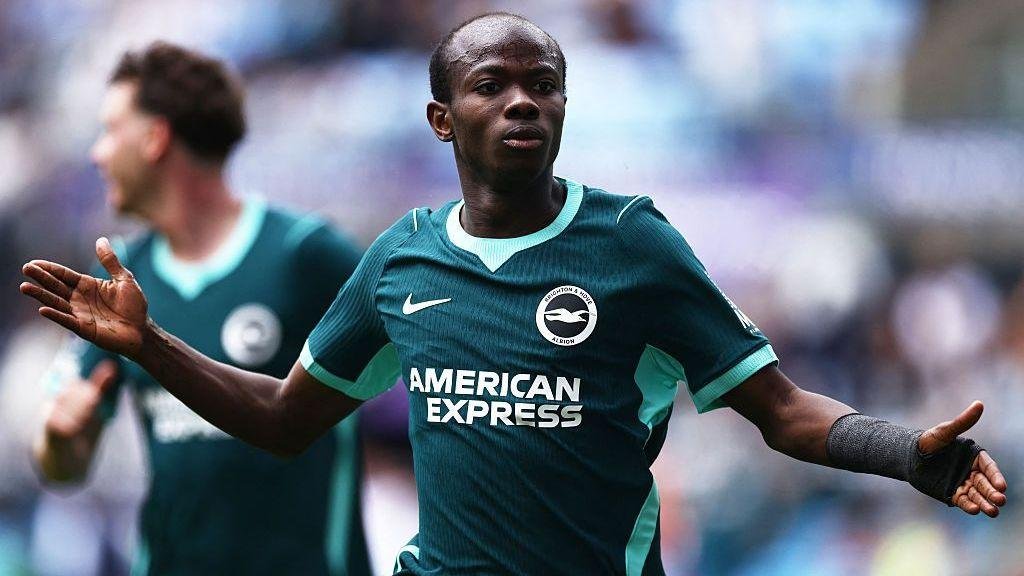
This season, Brighton continue to see returns from their loan strategy. Malick Yalcouye, a £6 million signing from Gothenburg, spent two years on loan at Sturm Graz and Swansea City. The 20-year-old has scored twice in five Premier League appearances. Ibrahim Osman, signed for £17 million from Danish club Nordsjaelland, had loan spells at Feyenoord, Auxerre, and Birmingham City. The 21-year-old winger has made three substitute appearances so far this season.
“Malik’s had a really good start to the season,” Cave said. “Osman is another young player who has had three loans now and then has come back into the squad for this season. They’re good examples and role models of a commitment to their own development, having an attitude and a desire to want to get better.”
Brighton also have Matias Orozco, an 18-year-old signed for £3.75 million from Deportivo Calli, currently with Caste—details unconfirmed. The club’s focus on nurturing youth through a clear developmental pathway, supported by data and character assessment, continues to define their rise in the Premier League standings.
According to Yahoo Sports.