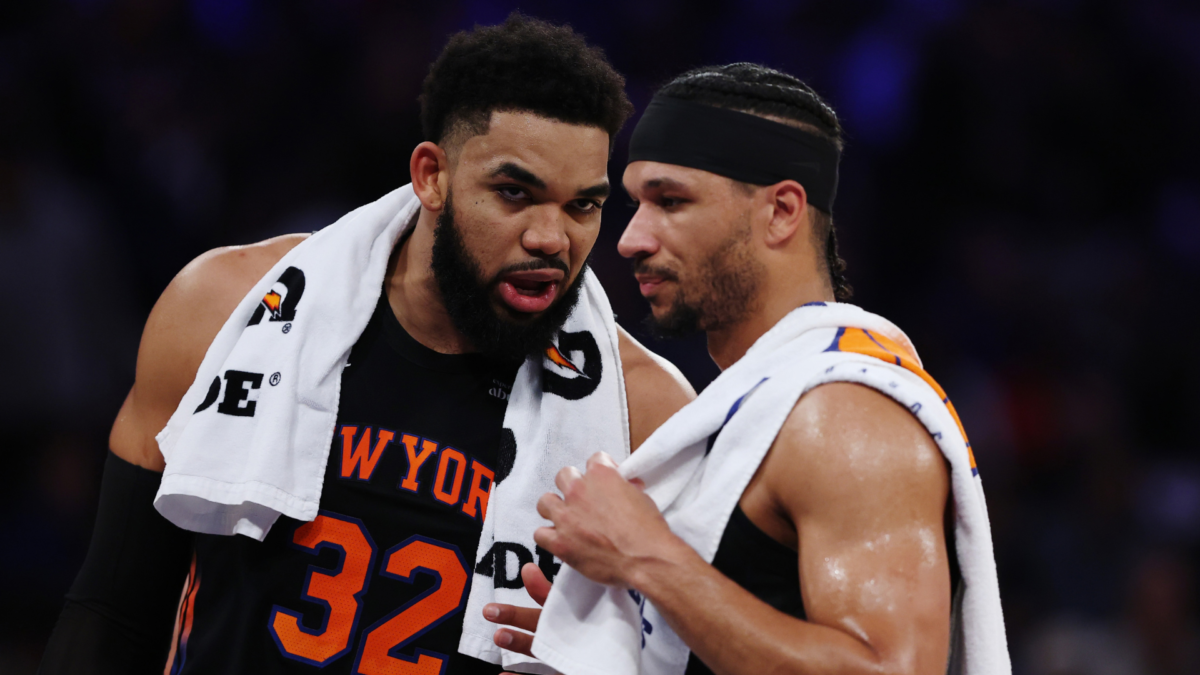
The New York Knicks have paused contract extension talks with Karl–Anthony Towns, Josh Hart, Miles McBride, and Tyler Kolek, leaving the team’s roster stability in question as they head into the new season. The Knicks announced on Friday that negotiations would be put on hold until later in the campaign, forcing these key players to start the season without clarity over their long-term futures.
The situation with Towns is particularly complicated. While the Knicks are expected to keep him, the timing and structure of his new deal could have wide-reaching effects on the rest of the roster. Towns remains an irreplaceable offensive center, with no comparable player available without significant draft capital, which the Knicks lack after letting Mitchell Robinson leave in free agency. The team has reportedly hoped Towns would accept a below-market contract similar to Jalen Brunson’s, but no agreement has been reached yet.
Towns has a $61.6 million player option for the 2027-28 season, which the Knicks could have used to front-load a new contract if they had reached a deal before the season. This would allow his salary to decline in later years, potentially easing financial pressure in the 2028-29 season when Brunson and OG Anunoby’s contracts begin. However, signing an extension during the season would require Towns to decline that option and accept a contract with a more balanced salary progression, limited to an 8% annual increase or decrease.
New York’s financial challenges peak in 2028-29, with Brunson’s next deal expected to take up around 35% of the salary cap and Anunoby’s player option estimated at 26.2%. Towns’ new contract will likely be substantial, probably close to the range of those two stars. Mikal Bridges is locked in at approximately 21% of the cap at that time, meaning the Knicks could be paying 110 to 115% of the salary cap for their top four players once all contracts are finalized. These deals will cover the latter stages of the players’ primes, raising concerns about age-related decline and injury risk.
Hart’s situation is less clear but still significant. As the team’s fifth starter and a key contributor, Hart holds a team option rather than a player option, giving New York more leverage in negotiations. He will turn 32 during the season and plays with a physical style that may not age well, especially given his inconsistent shooting. The Knicks have resisted moving him this season but might hesitate to commit to a long-term extension afterward.
McBride, a young guard with multiple years remaining on his contract, has yet to break into the starting lineup. The Knicks, under two different head coaches, have avoided playing him with the starters because of his size, leaving his role uncertain. Kolek, another player eligible for extension, faces a similar wait-and-see approach as talks are delayed.
The delay in negotiations removes an important element of flexibility for the Knicks. Early extensions allow teams to structure deals creatively around player options, but the pause means the Knicks will start the season without that advantage. Towns could still pick up his player option after the season and reopen talks, or his value could shift during the year, potentially leading to a more favourable deal later on. However, reaching agreements early is generally easier.
The Knicks face a financial cliff in the next two years with major contracts coming due. With Robinson gone and limited cap space, the team will need to be careful managing its salary commitments if it wants to remain competitive. The decision to table contract talks adds uncertainty to a roster that had hoped to build momentum from last season’s title run. The latest update confirms the Knicks’ commitment to revisit negotiations later but leaves the future of Towns, Hart, McBride, and Kolek unresolved as the new season begins.
According to CBS.