The Chicago White Sox used a mix of pitching styles to stifle the Houston Astros’ offense in Game 1 of their wild-card series, winning 6-3 in front of 34,011 fans at Guaranteed Rate Field on Tuesday. White Sox manager Will Venable’s decision to start 23-year-old left-hander Hagen Smith was influenced by the need to face Yordan Alvarez, the Astros’ dangerous second batter and American League MVP frontrunner. Smith’s unusual arm slot and fresh presence baffled Alvarez, who grounded out twice in three scoreless innings.
Smith’s delivery came from an average arm angle of 20.8 degrees, significantly lower than the MLB average for lefties, and he leaned heavily on sliders and cutters rather than the four-seam fastball he used most during the regular season. “Kind of crossfire, tough angle,” Astros manager Joe Espada said. “His pitches do have some kind of difficult shape that keeps you off-balance and he did a nice job of doing that.” Smith faced 11 batters, retiring nine and allowing just two hits.
Alvarez acknowledged the difficulty in adjusting to Smith’s pitching. “I think the angle of his arm slot is something that's a little bit difficult,” Alvarez said through an interpreter. “Also, we’ve never seen him before.”
The White Sox did not rely on Smith alone. Following his three innings, right-hander Jordan Hicks took over and retired all four hitters he faced, all right-handed, using a sinker that averaged 100.1 mph. In the fifth, Venable brought in lefty Sean Newcomb to handle a sequence of left-handed hitters, mixing arm angles and repertoires throughout the game.
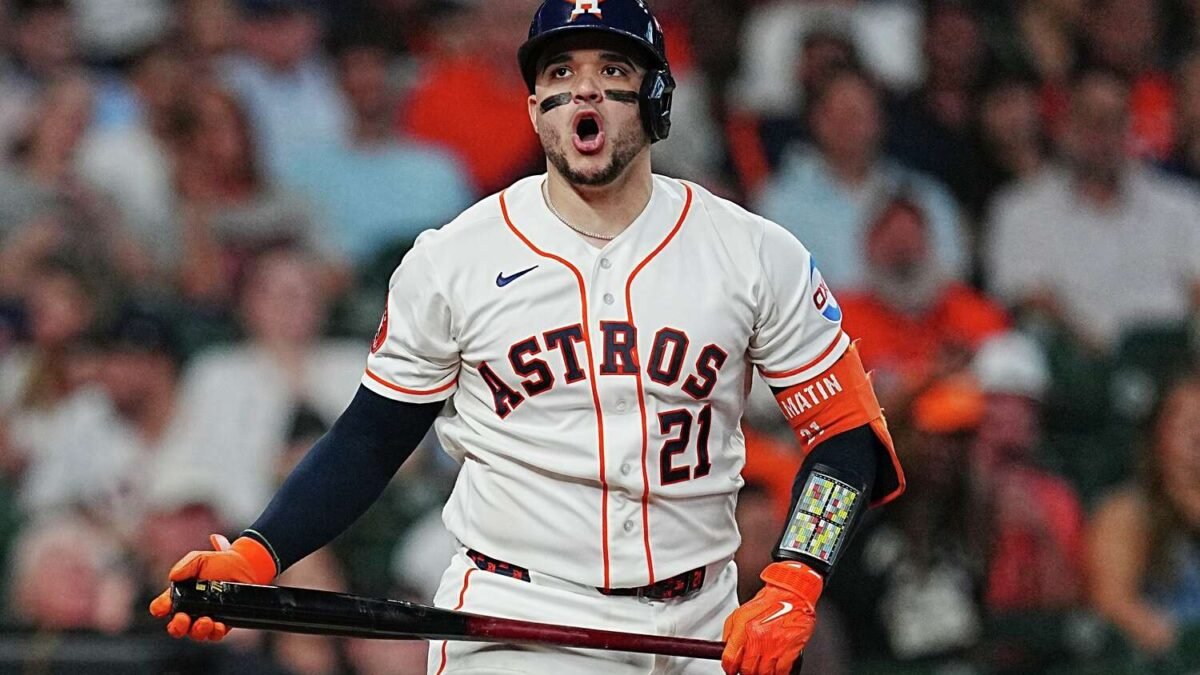
Houston's offense struggled to adapt. The Astros managed just six hits in total, failing to produce a hit in seven at-bats with runners in scoring position. “They really gave us multiple different arms, different arm angles,” Espada said. “They displayed different repertoires. I thought they did a nice job of just kind of mixing and matching and we just couldn’t really get anything going.”
The Astros’ lineup, which featured six right-handed hitters, still found it difficult to adjust to the shifting pitching styles. Shortstop Jeremy Peña commented on the challenge, “It’s the big leagues. We’ve got information on everybody.” Despite this, the team only produced two hits against Smith and faced a variety of pitchers throughout the game.
Chicago’s offense capitalized early and often. Using 11 hits total, the White Sox scored in six innings, including a two-run double by Antonacci and solo shots from C. Montgomery and Murakami. Nelson Velázquez, who pinch-hit for Taylor Trammell, hit a two-run homer in the fifth inning, adding to Houston’s challenges.
On the Astros’ side, Velázquez and Peña had two of the few moments of success, with Velázquez driving in two runs and Peña scoring once. However, the team left four runners stranded in scoring position and grounded into three double plays.
Houston's pitching, a bullpen game, faltered early. Starter Blubaugh lasted just two-thirds of an inning, giving up one run and walking three. Right-hander King followed but struggled, allowing four hits and two runs in only a third of an inning. The bullpen overall gave up six runs, with Hendrickson and Ullola also surrendering multiple hits and runs.
The White Sox bullpen fared better, combining five pitchers to allow three runs on six hits while striking out eight. The pitching mix kept the Astros off balance and prevented them from stringing together meaningful rallies.
With the Astros now facing elimination in this best-of-three series, their lineup will need to adjust quickly to the White Sox’s varied pitching approach if they hope to extend their postseason run. Meanwhile, Chicago’s use of arm angles and multiple pitchers kept Houston’s powerful offense in check throughout Game 1.
According to Yahoo Sports.