
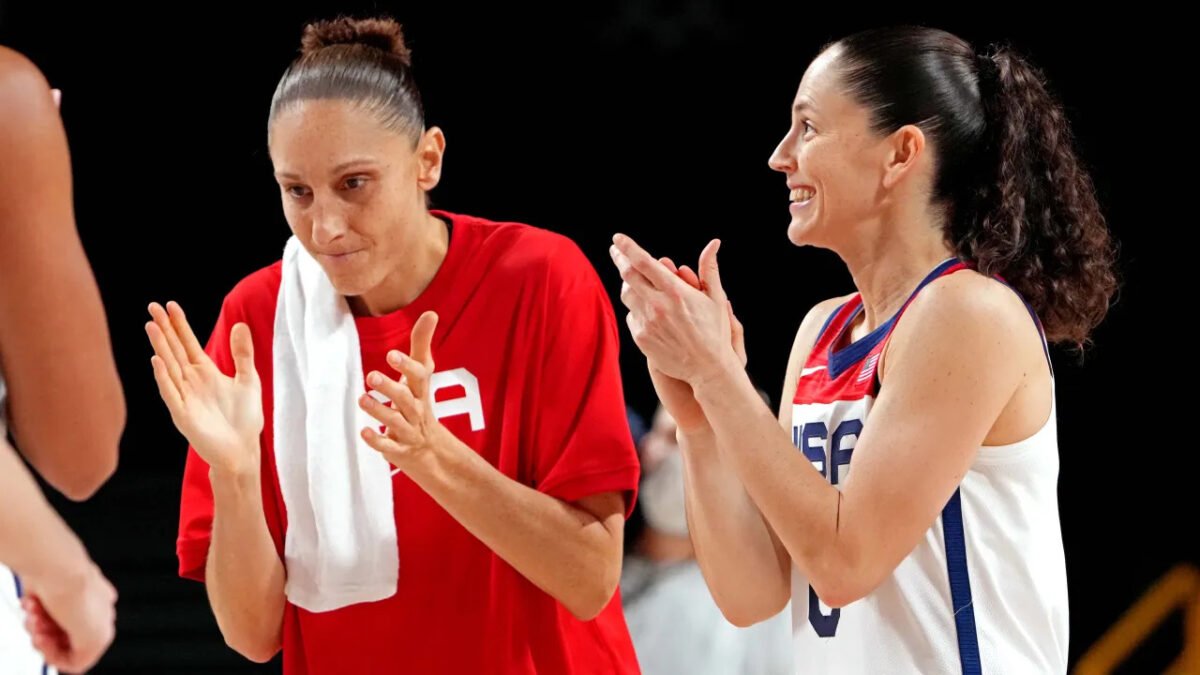
The 2006 semifinal in São Paulo was supposed to be a formality. The United States had dismantled Russia by ten points in the group stage, had swept aside China and Nigeria by a combined 80 points, and had just dispatched Lithuania by 34 in the quarter-finals. The roster housed eight current or future Hall of Famers, including Diana Taurasi, Sue Bird, Tamika Catchings, and a then-Tennessee star named Candace Parker. A gold medal was the expectation. The only question was the margin.
Russia had other plans. The Eastern European side, built largely from players in the country's domestic league, opened two ten-point leads in the first quarter. By the time the third quarter ended, that advantage had swelled to 20. The Americans battled back, with Taurasi and Parker combining for 34 points to fuel the comeback. But the Russians kept hitting from deep, and the upset was complete: 75-68. It remains the last time the United States failed to win the FIBA Women's World Cup.
Coach Anne Donovan, who led that team, did not mince words afterward. "They came out and shot better than they had all tournament," she said, per Tennessee. "This was the time when you have to step up and perform and I thought Russia did a great job with that tonight. Hats off to them. We made valiant runs a couple of times deep into the game, in the fourth quarter twice, but Russia's lead was too great for us to come back."
The loss dropped the U.S. into the third-place game, a relegation that stung given the program's standards. They recovered to secure a bronze medal, but the result was a sour note in an otherwise dominant era. Since that 2006 stumble, the Americans have won gold in each of their last four trips to the tournament, cementing their status as the best side the competition has ever seen.
The U.S. now accounts for more than half of the gold medals handed out in Women's World Cup history. The program has claimed 11 titles, five more than the Soviet Union, its closest competitor. In 19 trips to the tournament, the Americans have finished on the podium all but five times. The last time they left without any medal was 1975, when they fell out in the preliminary rounds.
That 2006 squad was stocked with starlight, which made the semifinal collapse all the more jarring. Taurasi, Bird, and Catchings were already established names, and Parker was on the cusp of a legendary career. The firepower on paper was overwhelming. But basketball is not played on paper, and Russia's shooting display was the kind of performance that overrides talent differentials. Donovan acknowledged as much, crediting Russia for stepping up when it mattered most.
The tournament history shows a pattern of American dominance punctuated by occasional, jarring interruptions. There was the fourth-place finish in 1964, the preliminary round exits in 1967 and 1971, and the 1975 collapse. Then came the bronze in 1994, a rare miss in an era that otherwise produced gold in 1979, 1983, 1990, and 1998. The 2002 team won gold in China, setting the stage for the 2006 disappointment that followed.
Since then, the run has been uninterrupted. Gold in 2010 in Czechia, gold in 2014 in Turkey, gold in 2018 in Spain, and gold in 2022 in Australia. The winning streak is now a defining feature of the program, a standard that makes the 2006 loss look like an anomaly. But the players on that team remember it differently. For them, it was a lesson in how quickly expectations can dissolve when an opponent shoots with confidence and abandon.
The 2006 result also stands as the biggest upset in women's basketball history, a label that has stuck even as the U.S. has piled up titles since. The Russians that night were not a collection of WNBA stars. They were a cohesive unit, familiar with each other from domestic competition, and they played like it when the stakes were highest.
The U.S. roster that year has since become a Who's Who of the sport's Hall of Fame. But on that night in São Paulo, all that pedigree did not translate into a victory. Taurasi and Parker gave the Americans a chance, but the hole was too deep. The comeback attempts in the fourth quarter, twice, came up short.
The next Women's World Cup is scheduled for 2026 in Germany, where the Americans will look to extend their streak to five consecutive gold medals. The last time they lost, George W. Bush was in his second term, and the players who will lead the 2026 squad were mostly children. The 2006 loss remains a footnote in an otherwise golden history, but for the players who lived it, it is a reminder that nothing is guaranteed.
According to Yahoo Sports.