
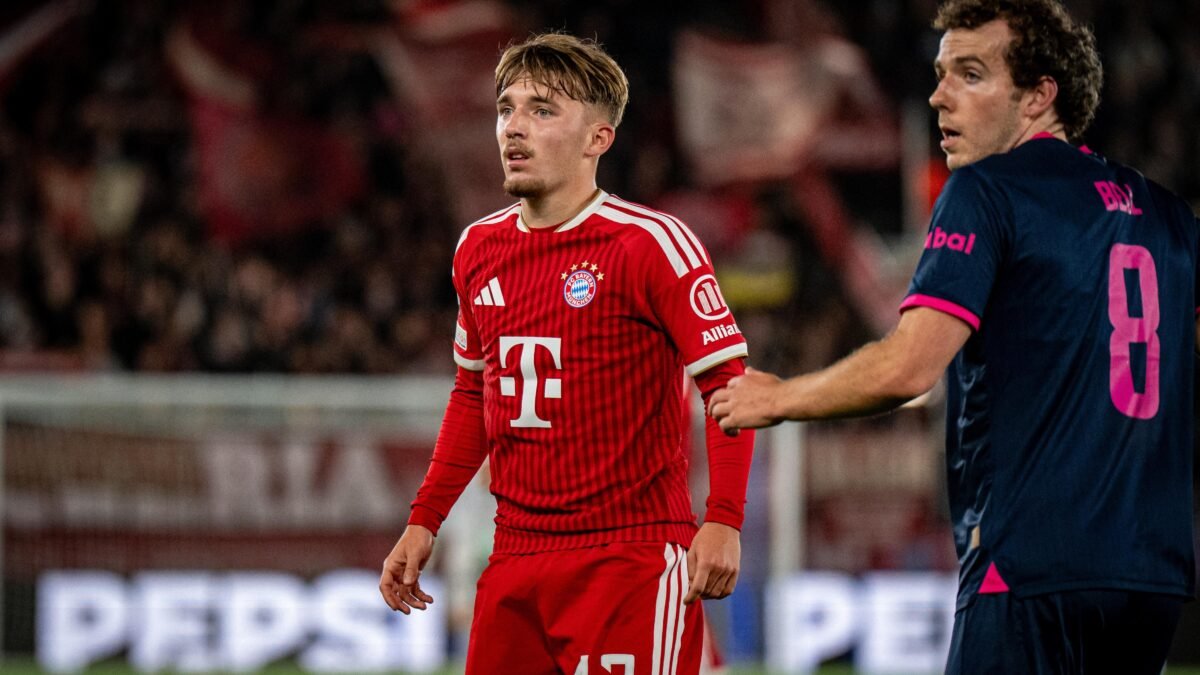
Lennart Karl has struggled to recapture the form that earned him praise during his breakthrough season at Bayern Munich, with recent performances exposing weaknesses in his off-the-ball movement and decision-making. The 18-year-old winger’s progress has stalled following a serious thigh injury last summer, and critics say he needs to sharpen up before the narrative of “too much, too soon” defines his career.
Karl’s biggest shortcoming lies in how he operates without the ball. Observers note that he often appears passive, waiting for play to develop rather than actively creating opportunities. At a club like Bayern Munich, where intensity and movement off the ball are expected, this approach limits his effectiveness. Last season, Karl was praised for his ability to find space and outmaneuver defenders through intelligent runs. Now, his movement looks static, and he rarely positions himself to open passing lanes or provide teammates with clear options.
Another concern is Karl's tendency to cut inside onto his left foot. While having a preferred move is common, Karl’s execution lacks the pace and unpredictability needed to break down defenses. Defenders have become accustomed to his approach, often intercepting the ball or forcing him into dead ends. The criticism is that Karl needs to speed up his play, vary his attacking moves, and display more directness to avoid becoming predictable.
There is also the question of whether Karl’s performance dip is connected to his injury. The thigh problem he suffered last summer was serious, and it’s possible he has not yet fully regained his sharpness. This context is important given his age and the rapid expectations placed on him. At 18, Karl is still in development, and a drop in form does not erase what he showed during his initial breakthrough.
Bayern fans have shown patience during his inconsistency and mistakes, but they have less tolerance for a perceived lack of effort. Reports suggest Karl could regain support by pressing more aggressively, moving with intent, and fighting for every ball. Demonstrating commitment in these areas could help him rebuild confidence without necessarily needing spectacular moments like goals or dazzling dribbles.
The pressure on Karl has been intense, with attention and praise arriving quickly. This can lead young players to believe the hype before they have developed the consistency to back it up. While Karl’s potential remains clear, relying on reputation alone is no longer an option. He must improve the less glamorous, tactical aspects of his game and learn to handle the spotlight while continuing to grow.
Bayern’s coaching staff will likely focus on helping Karl recapture his best form by encouraging more proactive movement and urgency on the pitch. His talent and the club’s environment provide a platform for progress, but the message is clear: hard work and determination are necessary to push through this difficult patch.
At present, Karl is still working to reclaim the sharpness that made him stand out. His future at Bayern depends on how quickly he can adjust and respond to the demands of top-level football without succumbing to early pressure.
According to Yahoo Sports.