
About two kilometres from Dublin’s Aviva Stadium, the Republic of Ireland’s planned venue for a Nations League match against Israel next week, a large banner hangs from Liberty Hall, the headquarters of the country’s main workers’ union. It reads: “Stop the Game. Go with your conscience, don’t play ball with genocide.” The banner is connected to a grassroots campaign opposing the scheduled fixtures.
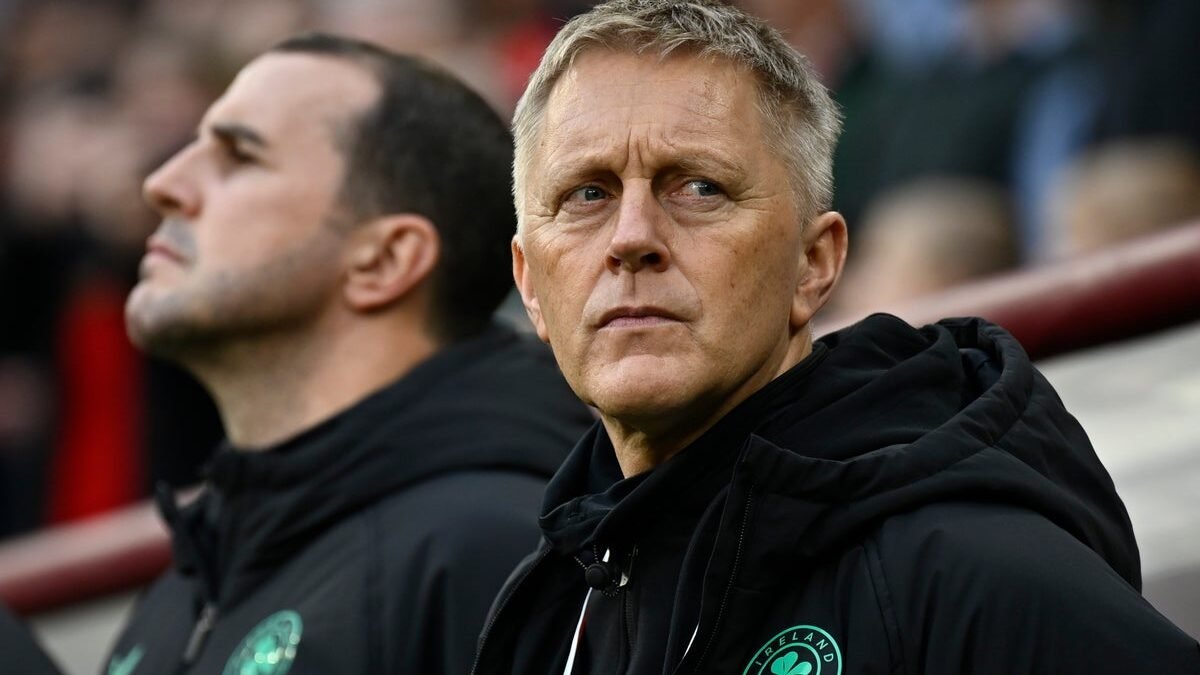
Irish manager Heimir Hallgrimsson amplified the message at his squad announcement, saying: “We are not playing with genocide, we are playing against genocide. We are playing against Israel, we are not playing with Israel.” His phrasing has stirred significant controversy, reflecting deep divisions within Irish society and angering Israel.
The United Nations Commission of Inquiry has described the conflict in Gaza as a “genocide,” but this has not been confirmed in an international court. Israel denies the claim. An Israel Football Association spokesperson responded sharply to Hallgrimsson’s remarks, saying, “it is impossible to say genocide against us and not respond to him.” The association’s official social media account called Hallgrimsson’s comments “stupidity, ignorance and hypocrisy,” adding: “We’re not playing with ignorance, hypocrisy and stupidity, we’re playing against the coach who embodies them.”
The Israel FA is reportedly considering filing a complaint with UEFA over the comments. There is also an expectation that players will not exchange shirts at full-time and that Israel coach Ran Ben Shimon will not shake hands with Hallgrimsson. The tension is palpable just six days before the first match.
The Football Association of Ireland (FAI) cancelled all media engagements outside UEFA requirements. FAI chief executive David Courell described the fixtures as “unique,” emphasising the difficulties surrounding them. Israel will host their “home” game in Debrecen, Hungary, on Sunday while Ireland’s “home” leg will take place in Backa Topola, Serbia, the following Sunday. Irish broadcaster RTE plans only to show a live feed of the matches in line with contractual obligations, with no additional coverage. LED advertising boards in Serbia will display only messages calling for “respect,” and traditional protocols such as joint dinners with opposition officials have been scrapped.
The decision to move Ireland’s home match from Dublin comes amid widespread public anger in Ireland about the Gaza conflict and concerns over protests that would disrupt the fixture. Courell cited “operational challenges” that could “impact on the delivery of the game” in Dublin. The move reflects a wider debate in Ireland about whether the national team should have played Israel at all. Critics have accused the FAI of “cowardice” for opting to proceed with the matches rather than calling for a boycott.
Fintan Drury, an Irish football agent and vocal critic of Western support for Israel, has been a prominent voice in the debate. He described public support for Palestine as “smothered by institutional cowardice,” criticising both the Irish government and the FAI for their decisions. Drury said the government’s “indifference” made it easier for the FAI board to withdraw its initial call on UEFA to ban Israel and then decide to play the matches once the fixture was set.
The controversy also reflects the wider diplomatic challenges UEFA faces. UEFA and FIFA maintain a policy of not banning national teams, viewing them as separate from their governments. Israel points to the presence of Arab players in its team to support this position. UEFA and FIFA have previously avoided bans, only taking action when countries like Poland refused to play matches on political grounds.
Courell expressed frustration that decisions about these matches are left to individual associations, saying he “wished” such matters were handled “on another level.” Hallgrimsson highlighted the contrast between Israel and Russia, noting that Russia was banned following its invasion of Ukraine but Israel remains eligible to compete. The distinction largely comes down to individual countries’ decisions rather than UEFA or FIFA policy.
The fixture comes after heightened security concerns for the Israeli team, which has faced similar challenges in recent years. A World Cup qualifier in Norway in November 2025 involved 16 Mossad agents and snipers stationed at hotels. Sources close to the Israeli team say many players remain affected by the Hamas attack on 7 October 2023. Ireland’s inability to host Israel safely is seen by some in European football as unusual, especially since Kosovo and Austria have been able to host Israel without incident.
The situation remains tense with the first match in Hungary only days away. The Irish and Israeli teams prepare for a fixture overshadowed by political conflict, public protest, and diplomatic strain. The FAI is still awaiting UEFA’s response to Israel’s expected complaint over Hallgrimsson’s remarks.
According to Yahoo Sports.