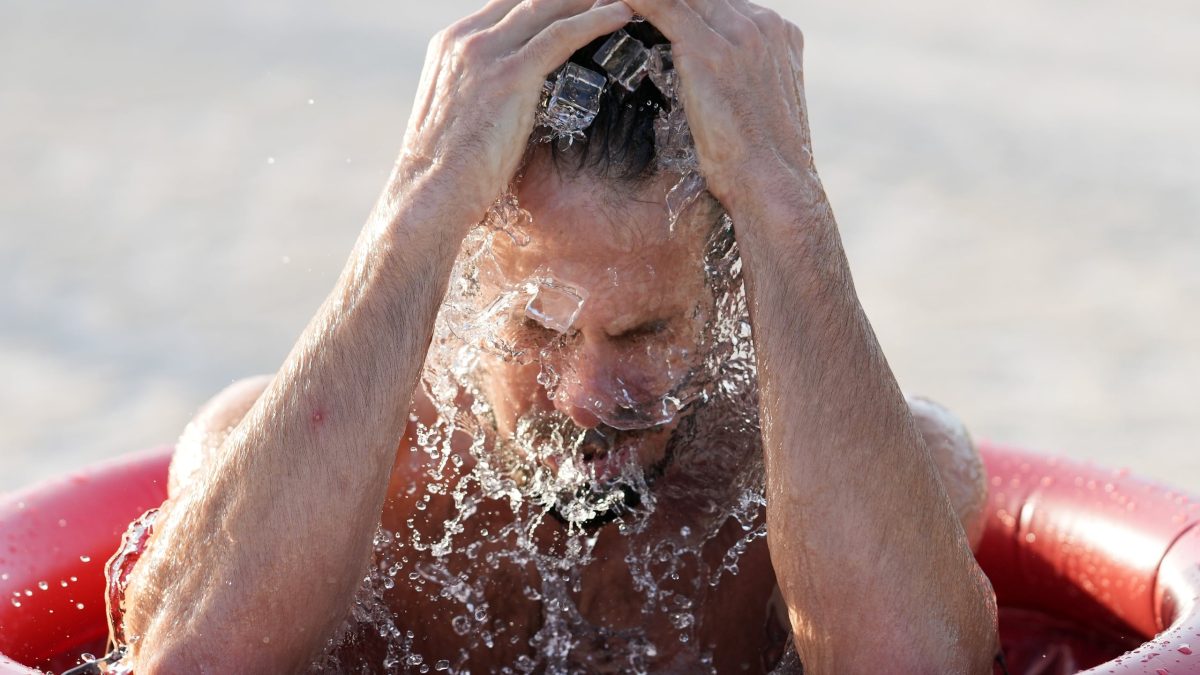
Ice baths can ease muscle soreness for up to four days, but their effects depend heavily on the athlete and timing, according to new research.
A large review published in Sports Medicine – Open analysed 15 reviews and meta-analyses covering 161 studies and more than 3,200 participants to assess the impact of cold-water immersion after exercise. The lead author, Erfan Berjisian from Edith Cowan University in Australia, said the benefits of ice baths vary according to the athlete’s goals, type of exercise, and schedule.
The evidence showed that cold-water immersion consistently reduces muscle soreness after exercise, particularly following high-intensity efforts. It also lowers levels of creatine kinase, a marker of muscle damage, between 24 and 72 hours post-exercise. Furthermore, ice baths seem to help the nervous system return to rest more quickly, improving heart-rate variability. However, the review found no consistent reductions in key markers of inflammation.
When it comes to athletic performance, the results are more complex. Cold-water immersion can temporarily boost endurance performance, but only if athletes exercise again within an hour of the immersion. This narrow window may be useful during tournaments or congested schedules where quick recovery is necessary, Berjisian said.
The review also noted improvements in muscular power and jumping performance 24 to 72 hours after cold-water immersion, which could aid recovery between demanding sessions. Yet, there is a downside for explosive movements immediately after immersion. In the first few hours, performance in high-speed or explosive tasks appears to decline, possibly because cooling reduces muscle force. Kristina Kendall, co-author and exercise scientist at Edith Cowan University, warned that ice baths might hinder performance unless athletes warm up properly after cooling.
A significant limitation emerged for those focused on muscle growth. The research found that cold-water immersion following resistance training reduces gains in muscle size and strength over time. The authors explained that ice baths blunt hypertrophy by lowering muscle protein synthesis and dampening anabolic signalling and satellite cell activity.
Given these mixed effects, the researchers advised against viewing cold-water immersion as inherently good or bad. Instead, it should be tailored to the individual’s needs and the timing relative to their training or competition.
For those keen to try ice baths, the team recommended spending 10 to 15 minutes in water between 10 and 15 degrees Celsius for general recovery. Colder temperatures of 5 to 10 degrees Celsius may be better for reducing muscle damage and improving jump recovery.
The findings provide a detailed look at the benefits and drawbacks of ice baths, showing that while cold plunges can aid recovery in some contexts, they may interfere with muscle growth and immediate explosive performance. The research was published this year in Sports Medicine – Open.
According to Yahoo Sports.