
The Republic of Ireland players will wear black armbands in their Nations League match against Israel as a mark of respect for lives lost in the ongoing Gaza conflict. The Football Association of Ireland (FAI) confirmed the gesture on Saturday after a player withdrew from the squad in protest, amid intense debate over whether the team should even play the fixture.
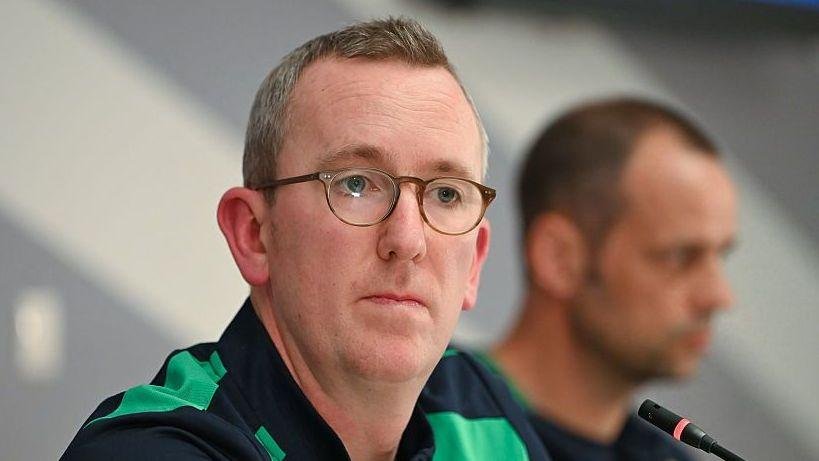
FAI chief executive David Courell said a vote among the squad produced a “significant majority” in favour of going ahead with Sunday’s game in Debrecen, Hungary. Courell revealed that one player, believed to be goalkeeper Gavin Bazunu, pulled out of the squad citing discomfort with the fixture. This prompted a four-hour meeting involving players, coaching staff, and FAI executives to discuss the situation before the decision was made to continue.
The players also plan to make further gestures during the match and the return fixture against Israel next Sunday in Serbia. Courell said the team would avoid some elements of the pre-match ceremony and would seek to contribute to charity through donations from match fees for the Israel games and an upcoming Nations League game against Austria at the Aviva Stadium in Dublin.
Pressure to cancel the games has grown since the Israel-Gaza war escalated on 7 October, when Hamas attacked Israel, killing around 1,200 people and taking 251 hostages. Israel’s military response in Gaza has resulted in more than 73,000 deaths, according to figures from Gaza’s Hamas-run health ministry, which the United Nations considers reliable.
The decision to play contrasts with calls for a boycott from figures including former Ireland manager Brian Kerr and ex-international James McClean. An activist group called Irish Sport for Palestine has pushed a “Stop The Game” campaign, urging the Irish team to withdraw from the fixture.
The situation left the Ireland squad in turmoil on Saturday morning. A pre-match news conference scheduled for 09:15 BST was postponed just minutes before it was due to start. Players were locked in a hotel meeting, with reports of heated discussion following the withdrawal of Bazunu and others expressing unease about playing Israel. The news conference eventually took place more than five hours later, alongside a delayed training session at Nagyerdei Stadion.
Manager Heimir Hallgrimsson described the pressure on the players as intense. He said the withdrawal of one player changed the squad’s stance and led to “ongoing discussion” that concluded with the majority deciding to play. “All of the rest of the players are training today,” Hallgrimsson confirmed. “It's a unique situation and we are just trying to limit the damage.”
Hallgrimsson acknowledged the difficult position the team faces, saying, “Nobody is comfortable but it’s about limiting the damage, both personally and for Irish football.” He said the squad would continue discussions leading up to the match and that no decision would satisfy everyone involved. “There is no action we do that everyone will agree to… It’s a situation you can’t win,” he added.
The controversy has overshadowed Ireland’s Nations League campaign, which began with a loss in Kosovo on Thursday. The events surrounding the Israel fixture have dominated media attention and placed the team under intense scrutiny.
Courell further detailed some of the players’ requests to reduce media obligations for the rest of the international window. The FAI said it respects all opinions within the squad and aims to balance those views with the need to fulfil international commitments.
As the Irish team prepares to face Israel wearing black armbands, the situation remains tense, reflecting the broader conflict playing out far beyond the football pitch. The decision to proceed with the fixture, despite protests and a player withdrawal, has left the squad navigating a complex and sensitive landscape in the shadow of ongoing violence.
According to Yahoo Sports.