
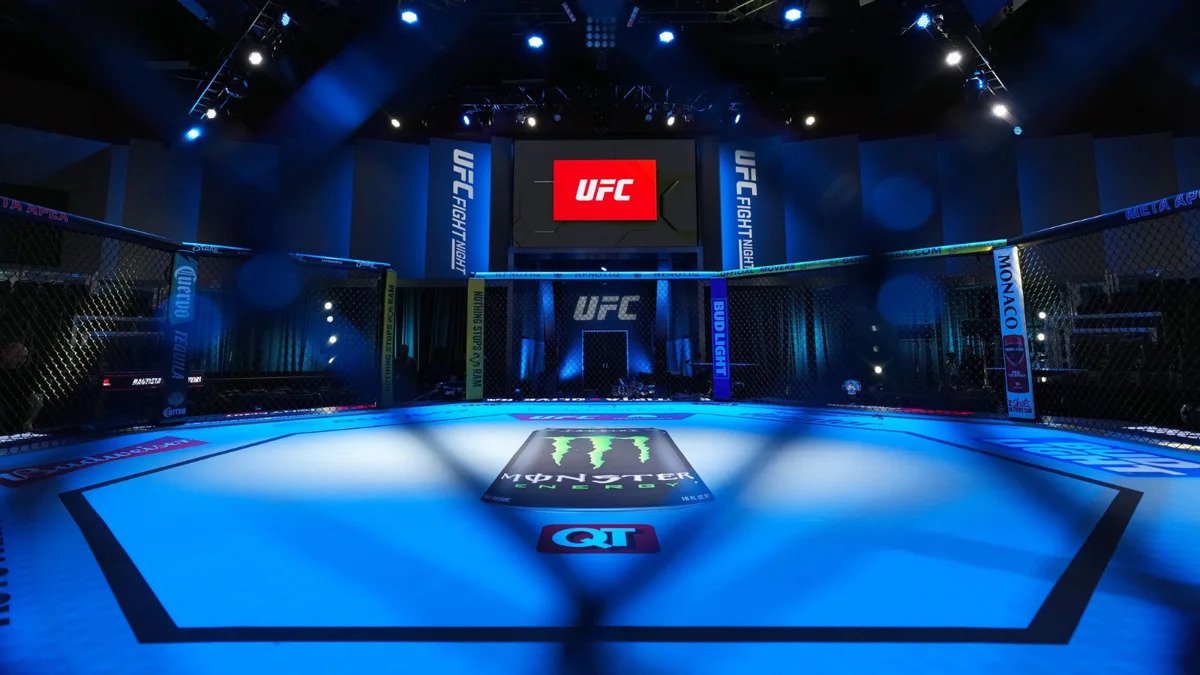
Randy Couture, the three-time UFC heavyweight champion who fought into his mid-40s, has a problem with the current state of mixed martial arts. The MMA legend, widely regarded as one of the best heavyweights in the sport's history, says modern promotions have turned prize fighting into something closer to sports entertainment.
Couture came up in an era when the best fighters regularly collided with each other. Now, he argues, the sport has fractured into closed systems where rankings and titles are controlled by individual promotions rather than earned against the strongest available opposition. In a recent interview, the former champion drew a direct line between today's UFC and WWE, pointing at the emphasis on trash talk and character building over sporting merit.
"It lends itself to the flaw in our sport," Couture said. "The fact that each one of these promotions has created their own little exclusive fiefdom, where they're setting the rankings and the titles, and they have a stable of fighters that, if they're on your good side, they're going to get ranked and they're going to get a shot at that title. And therein is the flaw in our sport."
Couture's critique extends beyond the UFC. He sees the same problem across the sport, where promotions operate as self-contained entities rather than part of a broader competitive ecosystem. The result, he says, is that matchmaking serves business interests ahead of sporting legitimacy.
"Prize fighting is all about getting the two best fighters, regardless of what stable they're in, to be able to compete against each other," he said. "Again, it lends itself to this kind of closed system that's not true prize fighting. It's more akin to WWE, and all about talking smack, than it is to traditional prize fighting, where the IBO guy is going to put his belt on the line against the WBO guy. And now let's see who the real champ is that carries both those belts around now. That's traditional prize fighting."
Couture built his reputation by defying expectations. He won his first UFC heavyweight title in 1997 at age 34, an age when many fighters are already past their peak. He went on to reclaim the belt twice more, the last time in 2007 at 43, beating Tim Sylvia to become the oldest champion in UFC history. His willingness to take on younger, larger opponents became a hallmark of his career, and he competed at the highest level well into his forties.
That background gives his criticism a particular weight. He is not a former fighter watching from the outside with nostalgia for a bygone era. He was part of the generation that helped build the sport's credibility, when the selling point was that the best would fight the best regardless of promotional politics.
The comparison to boxing is deliberate. In its traditional form, boxing's appeal rested on champions from different organisations meeting to settle who was genuinely the best. Couture wants MMA to operate on the same principle. Instead, he sees a sport where promotional loyalties determine opportunity, and where rankings can be influenced by factors other than performance.
His comments arrive at a moment when the UFC's dominance has never been greater. The promotion has absorbed most of the sport's top talent, and its events regularly sell out arenas and draw massive pay-per-view numbers. But that consolidation has also meant fewer meaningful cross-promotion fights. When the UFC holds nearly all the cards, there is little incentive to share the stage with rival organisations.
Couture's solution is straightforward. He wants to see champions tested against champions, not protected within promotional bubbles. Whether that model can survive in an era of exclusive contracts and promotional loyalty is another question. For Couture, though, the principle is simple: the sport works best when the best actually fight each other.
He is not alone in that view. Fighters and fans have long debated the merits of the current system, and the UFC's handling of rankings and title shots has been a recurring source of criticism. Couture's stature gives those concerns a prominent voice, and his willingness to name WWE explicitly sharpens the point. He is saying the sport risks becoming theatre rather than competition.
The former champion's remarks have not been addressed by the UFC. Couture, meanwhile, remains a respected figure in the sport, and his words carry weight with a generation of fans who remember when the heavyweight division was defined by fights like his battles with Chuck Liddell and Vitor Belfort.
Whether the sport changes course remains to be seen. Couture has made his position clear: modern MMA has drifted from its roots, and the closed system he describes is, in his view, a fundamental flaw. His comparison to WWE may sting, but it comes from a man who knows exactly what real prize fighting looks like.
According to Yahoo Sports.