
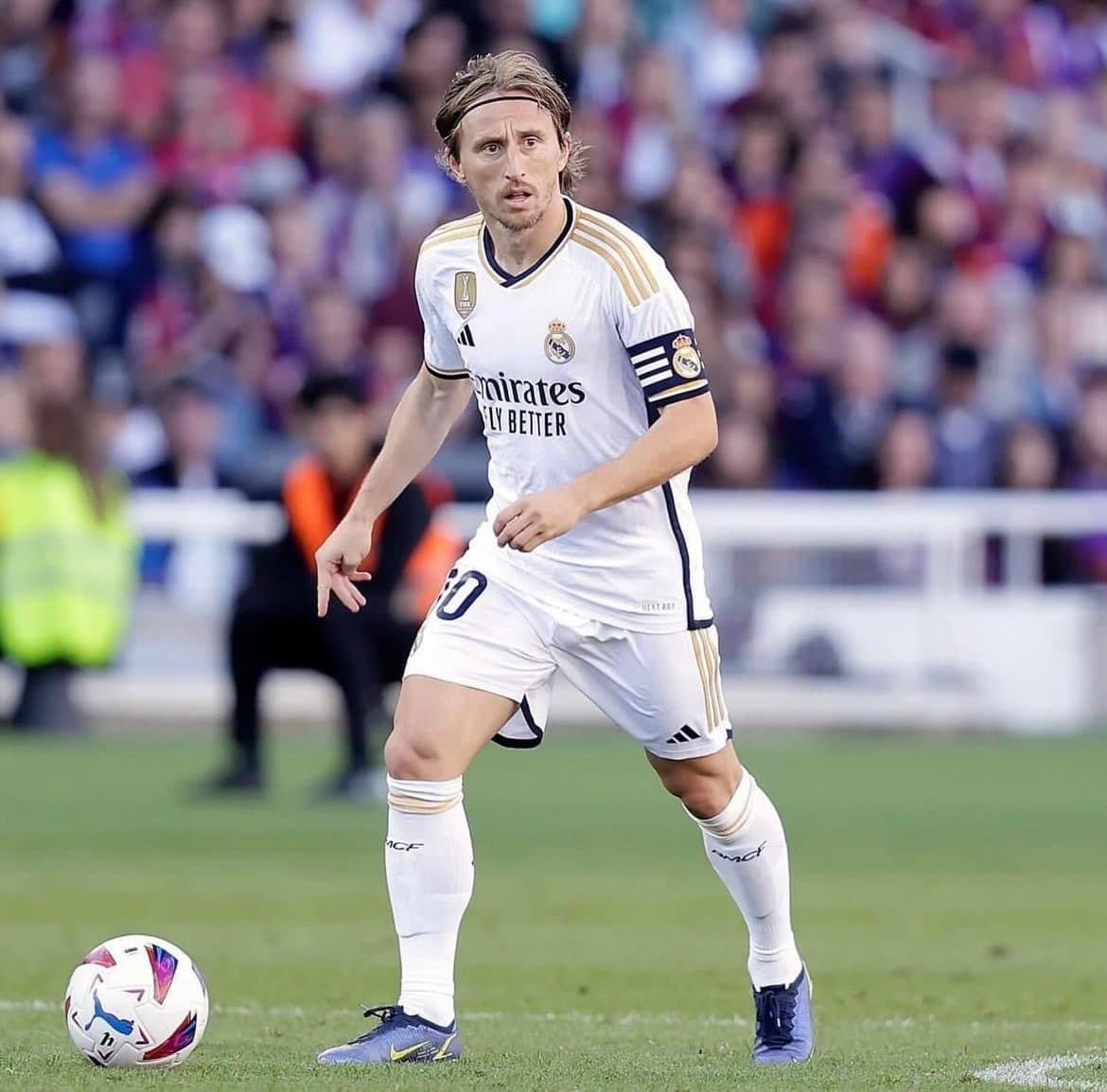






Luka Modrić never relied on size or physical strength to dominate a football match. He controlled games with intelligence, composure and an almost unmatched understanding of space. The ball seemed to move at his pace, never the other way around. While opponents chased possession, Modrić quietly dictated where the match would be played and how quickly it would unfold. His passing, vision and calmness under pressure made him the heartbeat of every team he represented. Those qualities turned a midfielder once dismissed for his slight frame into one of the greatest players of his generation.
Modrić was born on September 9, 1985, in Zadar, Croatia, during one of the most difficult periods in the country’s history. His childhood was shaped by the Croatian War of Independence, and his family spent time living as refugees after his grandfather was killed during the conflict. Even in those difficult circumstances, football remained his escape. He joined the youth academy at NK Zadar before moving to Dinamo Zagreb, where coaches quickly recognised his exceptional technique and awareness. Loan spells at Zrinjski Mostar in Bosnia and Herzegovina and later Inter Zaprešić helped him mature against experienced professionals before he returned to establish himself at Dinamo.
His performances earned him a move to Tottenham Hotspur in 2008. English football demanded a different style, and there were early doubts about whether he could cope with the physical nature of the Premier League. Modrić answered those questions with his football. He became Tottenham’s most influential midfielder, controlling possession and creating attacks with remarkable consistency. Real Madrid signed him in 2012, although his first months in Spain were not easy. Criticism arrived quickly, but he remained patient. As his understanding with teammates grew, so did his influence, and he soon became the driving force behind one of the most successful teams in the club’s history.
At Real Madrid, Modrić formed an outstanding midfield alongside Toni Kroos and Casemiro. Together they helped the club dominate European football, winning multiple UEFA Champions League titles and several La Liga championships. Individual recognition followed in 2018 after Modrić led Croatia to its first FIFA World Cup final. Although Croatia lost to France, his performances throughout the tournament earned him the Golden Ball as the competition’s best player. Later that year, he won the Ballon d’Or, ending the decade-long dominance of Lionel Messi and Cristiano Ronaldo and becoming the first Croatian to receive football’s highest individual honour.
One performance continues to capture everything that made Modrić special. During Real Madrid’s Champions League quarter-final against Chelsea in 2022, with the tie slipping away, he delivered an extraordinary outside-of-the-foot pass that found Rodrygo for a goal that forced extra time. It was a moment of pure quality produced under enormous pressure. The pass required vision, precision and complete confidence. Real Madrid went on to win the tie, and Modrić once again reminded supporters that the biggest matches often belonged to players capable of seeing opportunities that others never noticed.
Modrić spent more than a decade at Real Madrid and left the club in 2025 as its most decorated player, having won 28 major trophies, including six UEFA Champions League titles and four La Liga crowns. He also became Croatia’s most-capped player and served as captain for many years, leading his country to another World Cup medal with a third-place finish in 2022. His career was built on consistency, intelligence and an unwavering belief in his own ability. Long after his final appearance, his influence remains part of Real Madrid’s history and Croatian football alike.
Latest
Modrić left Real Madrid in 2025 after 13 seasons and joined AC Milan. He played 37 matches in his first season in Italy and, at 40, signed a new contract in July 2026 that keeps him at San Siro until June 2027.

