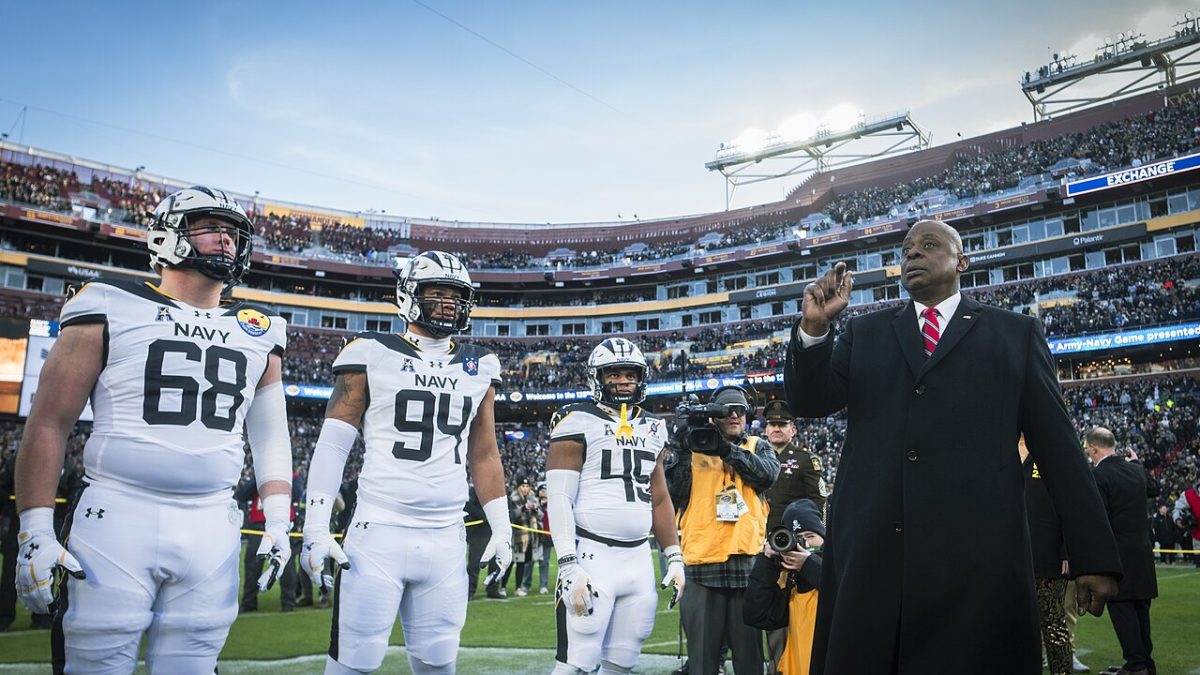
Navy had already erased most of a 16-7 deficit when it faced fourth and goal with 6:32 left in last year’s Army-Navy Game. Quarterback Blake Horvath found Eli Heidenreich for the touchdown, and the Midshipmen won 17-16 in Baltimore on 13 December 2025. The 127th meeting moves to a new home on Saturday 12 December 2026, when the academies play at MetLife Stadium in East Rutherford, New Jersey, for the first time. Kickoff is at 3 p.m. ET on CBS, the game’s exclusive broadcaster since 1996.
Navy leads the all-time series 64-55-7. The last result also let the Midshipmen keep the Commander-in-Chief’s Trophy for a second straight year, the prize contested among Army, Navy and Air Force.
A rivalry older than the forward pass
The series began on the Plain at West Point on 29 November 1890, when Navy won 24-0. It was the first official football game in Army’s history. Within a few years the fixture had grown so heated that it went on a five-year hiatus, after a dispute at Annapolis between an Army brigadier general and a Navy rear admiral reportedly came close to a duel.
When the series resumed in 1899, Philadelphia was chosen as neutral ground. It became the game’s traditional home and has hosted more meetings than any other city. Other venues have taken their turn, including Chicago’s Soldier Field, where the 1926 game ended in a 21-21 tie in front of a crowd reported at more than 100,000. The contest has also travelled to Pasadena, East Rutherford’s old Giants Stadium and Baltimore. MetLife, which holds 82,500 for football and is shared by the Giants and Jets, adds another big-market stop.
When the game mattered to the whole country
For long stretches of the 20th century, this was a game with national title implications. Army’s teams of the mid-1940s, led by Heisman Trophy winners Doc Blanchard and Glenn Davis, were the strongest in the nation while much of the country’s football talent was in uniform. Their 1945 meeting with Navy, billed as the game of the century, matched a 9-0 Army against a 7-0-1 Navy and ended 32-13 to Army. Navy produced its own Heisman winners in Joe Bellino in 1960 and Roger Staubach in 1963.
The 1963 game carries the heaviest memory. It was due to be played days after the assassination of President John F. Kennedy, a Navy veteran. Organisers postponed it by a week, and it went ahead on 7 December at the request of Jacqueline Kennedy, who considered it a fitting tribute to her husband. Navy won 21-15 in Philadelphia before about 102,000 people. The broadcast also brought the American debut of instant replay.
The sport has since moved away from the service academies. NFL ambitions and scholarship money pull elite recruits elsewhere, and players at West Point and Annapolis commit to military service after graduation. That is the source of the game’s modern appeal. Most of the men on the field are preparing for careers as officers, and many will be deployed within a few years.
The recent history has its own swings. Navy won 14 straight from 2002 to 2015, the longest streak in the series, before Army ended it 21-17 on 10 December 2016. The 2022 game brought the first overtime in the rivalry’s history, with Army winning 20-17 in double overtime. Calvin Huey became the first African-American to play in the series in 1964. Presidents have long been part of the setting too. Harry Truman attended all but one game between 1945 and 1953, and ten sitting presidents have come since 1901.
The tradition that outlasts the score
The most watched moment often comes after the final whistle. Both teams stand together for each academy’s alma mater, first in front of the losing side’s supporters and then in front of the winners. Players call the goal “singing second”, since only the winning team gets to sing last. For a rivalry that spends 60 minutes in open hostility, the sight of the two squads standing at attention side by side has become its signature image.
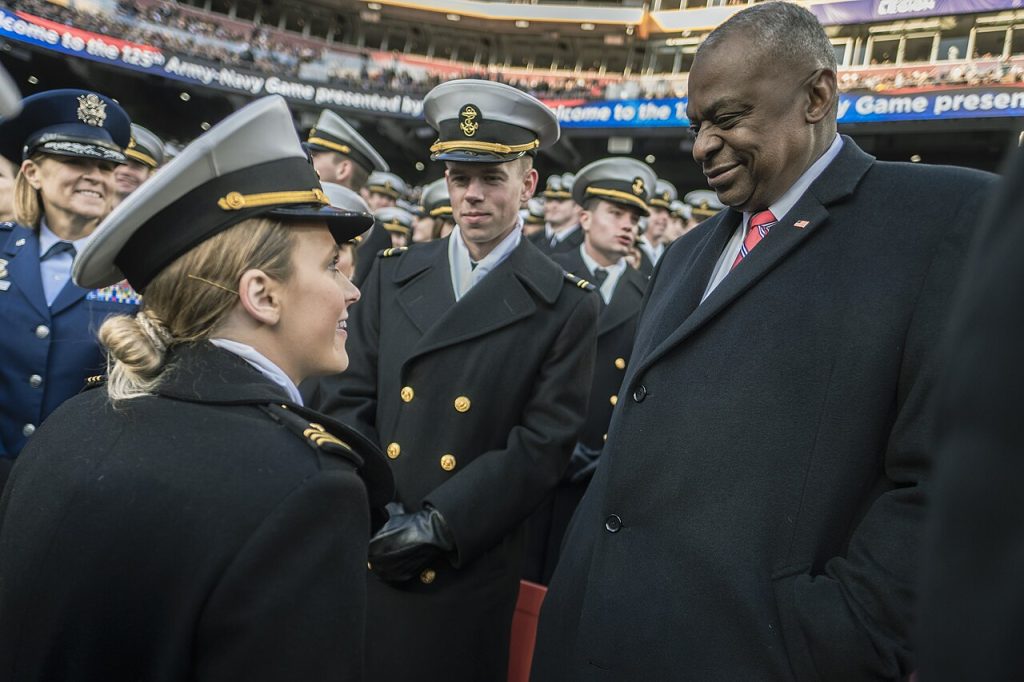
Last December, Navy’s comeback secured a second consecutive 10-win season for the first time in the program’s history. Next year the calendar shifts again, with the 2027 game moved to 4 December at Philadelphia’s Lincoln Financial Field because of the College Football Playoff’s expansion to 24 teams. For now the rivalry heads to New Jersey, where Army will try to end a two-game losing run and win the right to sing second.