On 9 February 1980, the Soviet Union beat the United States 10-3 at Madison Square Garden. Thirteen days later the same American college players faced the same opponents at the Olympic Center in Lake Placid, New York, and won 4-3. Goaltender Jim Craig stopped 36 of 39 shots. The Soviets, gold medallists at the previous four Winter Games, had fired 39 at him and the Americans had managed 16 in return.
The result is still the reference point for upsets in American sport, and the details hold up better than the legend usually does.
A team built in months
Herb Brooks, the University of Minnesota coach, picked a squad of amateurs and young players, many of them from Minnesota and Massachusetts colleges. The team’s average age was 21, the youngest in US Olympic history, and only four players had experience above amateur level. Brooks had been the last player cut from the 1960 US Olympic team, the side that won gold at Squaw Valley. He ran his 1980 group hard through a long pre-Olympic schedule and made conditioning the centre of his plan, believing that a side able to skate with the Soviets for three periods would have a chance.
The opposition was formidable. The Soviet national team had thrashed a group of NHL All-Stars 6-0 in the deciding game of the 1979 Challenge Cup. Its roster included goaltender Vladislav Tretiak, widely regarded as the best in the world, along with forwards Boris Mikhailov, Valeri Kharlamov and Sergei Makarov. The Americans went into the Olympic tournament seeded seventh.
They opened with a 2-2 draw against Sweden, saved by a Bill Baker goal with 27 seconds left after Brooks pulled his goaltender. A 7-3 win over Czechoslovakia followed, then victories of 5-1 over Norway, 7-2 over Romania and 4-2 over West Germany. That run put them in the medal round, where the Soviets were waiting on Friday 22 February.
One second that changed the game
Before the game Brooks gave his players a short speech. “You were born to be a player. You were meant to be here. This moment is yours,” he told them. The crowd of 8,500 filled an arena that now carries his name.
The Soviets led twice in the first period, through Vladimir Krutov and Makarov, with Buzz Schneider equalising in between. With the clock almost gone and the score 2-1, Dave Christian sent a long shot at Tretiak. The rebound came out, the Soviet defence eased off, and Mark Johnson slipped through to score with one second left.
Soviet coach Viktor Tikhonov then made the decision he would be asked about for the rest of his life. He took Tretiak out and sent in the backup, Vladimir Myshkin, for the second period. Tikhonov later called it “the biggest mistake of my career”, and defenceman Viacheslav Fetisov put it more bluntly: “Coach crazy.” Aleksandr Maltsev put the Soviets ahead 3-2 on a power play in that period, and the Americans barely got a shot away.
In the third, Johnson tied the game at 3-3 on a power play. Then, with exactly 10 minutes remaining, captain Mike Eruzione took a loose puck in the Soviet zone and beat Myshkin with a wrist shot through a screen. The last stretch belonged to Craig and a defence that kept clearing the puck. As the seconds ran out, ABC’s Al Michaels asked the question now printed on countless posters: “Do you believe in miracles? Yes!”
The game most Americans saw on tape
Few viewers watched it live. The game started at 5 p.m. Eastern, and ABC showed it on a delay in prime time that evening, so many Americans already knew the score when they tuned in. The Cold War gave the night its charge. The Soviet invasion of Afghanistan had begun weeks earlier, and President Jimmy Carter was threatening a boycott of the Moscow Summer Olympics, which the US went on to carry out.
The win did not yet bring a medal. Under the tournament format, the Americans still had to beat Finland on 24 February. They trailed 2-1 after two periods, scored three times in the third and won 4-2. Eruzione called his teammates up onto the podium to share the top step. The Soviets took silver and returned to win gold in 1984 and 1988.
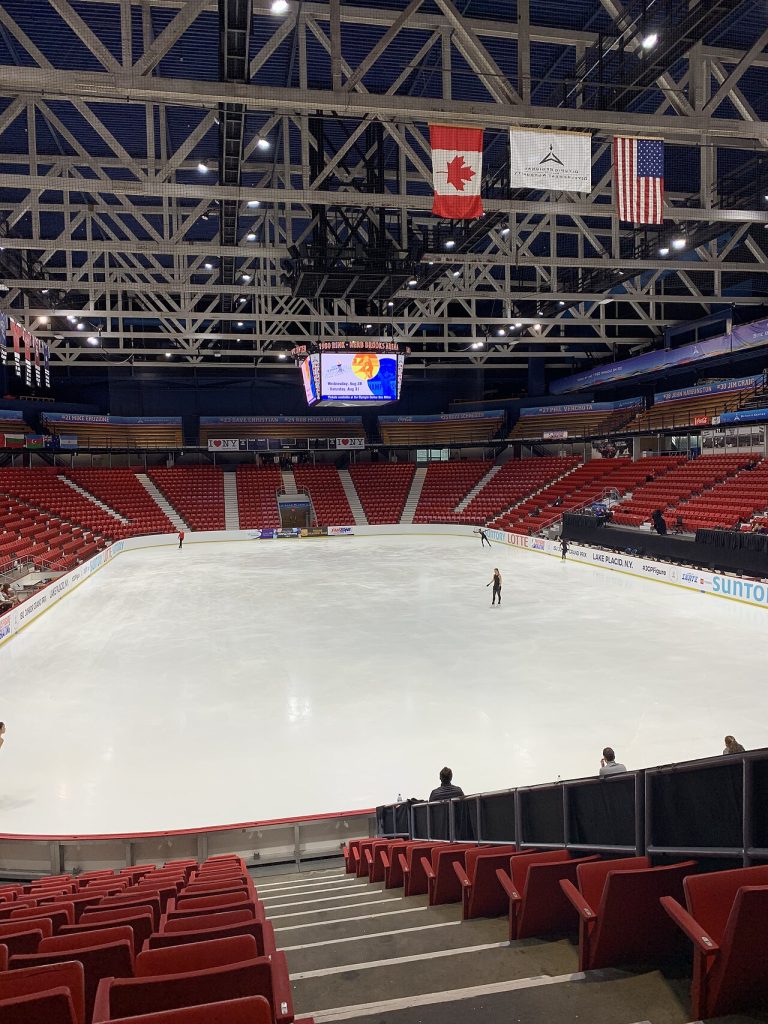
Honours kept arriving for decades. Sports Illustrated named the team its Sportsmen of the Year for 1980 and in 1999 called the win the top sports moment of the 20th century. Defenceman Ken Morrow joined the New York Islanders and won the Stanley Cup that same year. In 2025 the players received the Congressional Gold Medal, 45 years after a game most of the country first saw on tape.