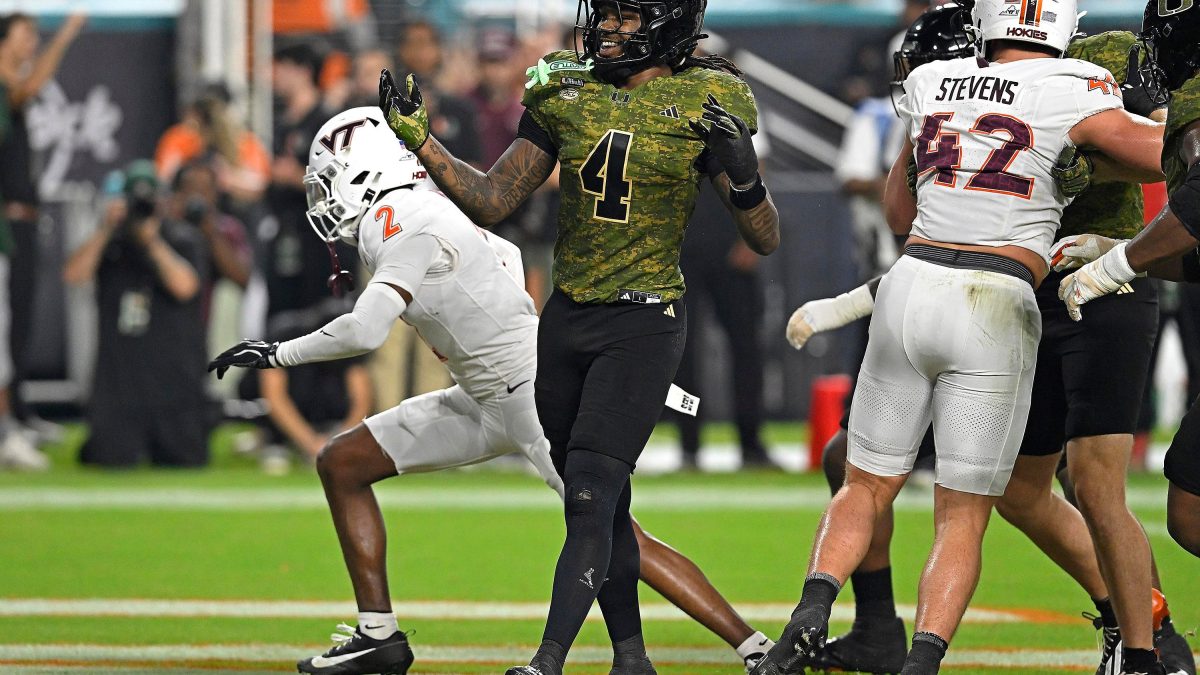
Miami’s comeback from a 14-0 deficit against Virginia Tech on Saturday hinged on a late surge that overturned the Hokies’ early dominance. The Hurricanes rallied with two fourth-quarter touchdowns, edging out the Hokies 28-20 at Hard Rock Stadium in Miami Gardens.
Miami (10-1) fell behind quickly as Virginia Tech (6-5) opened with an eight-minute, 15-play scoring drive. The Hokies then capitalized on a Miami turnover, scoring again on a short-field possession to establish a 14-point lead. Despite that daunting start, Miami chipped away through the second quarter, adding 11 points to trim the halftime gap to three.
Miami’s strategy was to keep their heads down and drive, a theme that paid off in the second half. The Hurricanes switched their coverage from a deep 1/3 zone to man defense, disrupting Virginia Tech’s offense and limiting their ability to pick apart the field with short passes. Miami’s defense held firm, preventing the Hokies from sustaining drives after halftime.
Running back Mark Fletcher Jr. led Miami’s ground game with 63 yards and three touchdowns, despite battling through injuries. His consistent runs forced the Hokies to spread their defense thin and opened up opportunities for Miami’s offense. Fletcher’s runs left the Hokies scrambling and unable to contain Miami’s methodical ground attack.
Quarterback Darian Mensah, a Heisman Trophy contender, had an uncharacteristically difficult game. He averaged just 6.5 yards per pass attempt, threw no touchdown passes, and was intercepted twice. Both interceptions came under unusual circumstances: one was tipped by Javian Mallory, and the other resulted from a misread on what the offense thought was a free play. Despite these challenges, Mensah connected with eight different receivers, with Cooper Barkate catching seven passes.
The offensive line struggled at times, allowing two sacks and five tackles for loss. They also faced pressure that forced Mensah to scramble or throw incomplete passes. Miami’s offense showed flashes of creativity, including a wide sweep play that gained 12 yards and slide routes off play-action that created open space for receivers.
Defensively, Miami limited Virginia Tech’s star running back Jeffrey Overton to just 2.9 yards per carry and one short touchdown reception. The Hurricanes’ defense prevented Overton from replicating the impact of Hokies’ running back Sheppard from Duke, who had been more productive in previous games. Virginia Tech quarterback Ethan Grunkemeyer threw for one touchdown but was mostly contained, averaging 4.8 yards per pass attempt.
The Hurricanes fell behind in the turnover and penalty battles. Miami committed two turnovers compared to none for Virginia Tech, and the Hurricanes were flagged for 45 yards in penalties while the Hokies only had 10 yards. On money downs, Miami converted nine of 15 attempts, outperforming Virginia Tech’s five of 14.
Despite these setbacks, Miami’s defense held on when it mattered most. After a slow start that saw the Hokies score twice within the first few minutes, Miami’s defense tightened, forcing Virginia Tech into stalled drives and limiting their big-play opportunities. The defensive adjustments in the second half were critical to Miami’s comeback.
Both teams’ kickers were perfect on field goals, each converting two attempts. Miami’s ability to overcome the early deficit and win by eight points defied the statistical edge Virginia Tech held in penalties and turnovers.
Miami’s victory came down to grinding out yards on the ground and tightening up defensively when it mattered most. Fletcher’s three rushing touchdowns and the switch to man coverage in the second half flipped momentum in Miami’s favor. The Hurricanes improved to 10-1, while Virginia Tech dropped to 6-5 after a game they started strongly but could not finish.
According to Yahoo Sports.