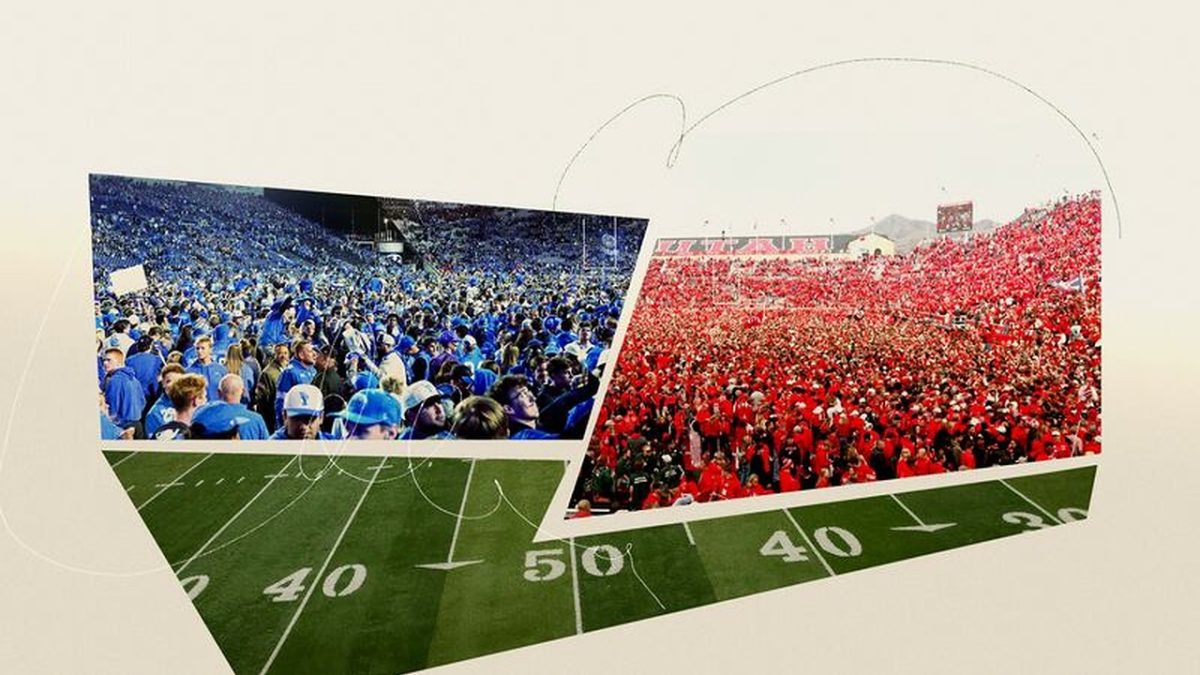
The 1990 WAC quarterfinal between BYU and Utah ended with a missed free throw that still haunts fans more than three decades later. Michelle Budge recalls the moment alone in the dark, tears flowing after BYU’s Andy Toolson and Marty Haws failed to tie the game. The loss meant facing gloating Ute fans the next day, a familiar sting in a rivalry that has long divided neighborhoods and families in Utah.
This season, Budge tried something different. After years of intense emotional swings tied to BYU’s fortunes, she decided to pull back and root for both teams to some extent. The experiment started in October and quickly altered her experience of the rivalry. When BYU fell to Utah after leading at halftime, she felt disappointment but not the crushing despair of past defeats. The following week, she found herself genuinely hoping for a Utah victory against Arizona, even though it risked hurting Cougar fans.
Her new perspective extended beyond personal relief. Budge shared highlights of Utah’s comeback win with her sons and pointed out how Ute quarterback Devon Dampier credited his entire team in a postgame interview. One of her boys admitted, “I like that guy,” a sign that respect for players from rival schools can grow even amid fierce competition.
Dampier’s reflections were captured in a clip shared by FOX College Football on November 15, 2026, where he praised his teammates for their performance. Budge sees this as an example of the kind of sportsmanship that could ease the rivalry’s intensity. She recalls a message from former Senator Jeff Flake’s mother: “Assume the best. Look for the good.” It’s advice she believes could make the rivalry less painful for fans.
The rivalry between Utah and BYU has long been about more than just football. Budge remembers how in her Farmington neighborhood, families rooted passionately for one side or the other, even as they shared church and community ties. The rivalry has been so intense that fans would toilet-paper neighbors’ houses and trade barbs for days.
Sports psychologists explain this through tribal instincts, where fans identify with their team as an extension of themselves and see the opponent as an existential threat. Such rivalries increase stress hormones during games and reduce empathy, making fans relish rivals’ misfortune rather than appreciating good play.
Budge’s experiment is part of a broader shift in how some fans approach the longstanding rivalry. BYUtv’s tradition of posting tributes to rival teams’ alumni, like the recent 13-minute feature on former Notre Dame star Chris Zorich before the Notre Dame-BYU game, reflects a spirit of respect that transcends the final score. Food drives and service projects organized by alumni during away games add another layer of goodwill.
The Utah Jazz’s struggles over recent years also influenced Budge’s attitude toward sports fandom. The team’s “Tanking Era” and loss of young fans in her family have led her sons to support other NBA franchises like the Celtics, Suns, Lakers, and Warriors. Watching their teams win titles or make deep playoff runs brought joy without the emotional turmoil tied to local allegiances.
Budge’s experiment this season has made watching BYU and Utah games less of an emotional rollercoaster. She describes feeling more curious and open to good performances regardless of which team is playing. The rivalry remains intense, but fans like her are finding ways to enjoy the sport without the old emotional cost.
The latest Utah-BYU game at Rice-Eccles Stadium on November 7, 2026, drew passionate football fans awaiting the players’ arrival. Budge’s evolving fandom reflects a new approach to this historic rivalry, appreciating skill and effort on both sides while easing the burden of allegiance.
According to Yahoo Sports.