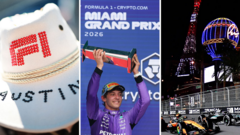
Around 300,000 fans gathered this weekend to watch the Formula 1 Grand Prix unfold along the Las Vegas Strip, underscoring the surge of F1’s presence in the United States. The spectacle in Nevada, now three years on the F1 calendar, is part of a trio of US races that have boosted fan culture significantly, with Austin hosting the longest-running event since 2012 and Miami joining in 2022.
Cadence Kim from Dallas, an avid F1 follower, described the contrast between the three American venues. "Vegas is a party," she said. The Nevada desert’s chill at night requires warm socks, hoodies, and gloves despite the usual cowboy hats staying home. The event’s structure funnels spectators through designated pedestrian walkways, and ticket holders are limited to specific viewing zones on the track. Hotel lobbies partnered with teams become informal fan zones where attendees might share an elevator with an engineer.
Kim noted significant differences in fan experience from Austin to Miami. Austin offers freedom to roam much of the Circuit of the Americas, with a distinctly local vibe featuring Texas BBQ and bedazzled cowboy hats. Miami, she said, was less appealing due to the daytime heat baking both the track and attendees. "I would not consider going back unless it became a night race," she added, advising fans to prepare for a multi-day, outdoor trek with comfortable shoes and hydration essentials.
The three US races have transformed F1 fandom from a niche, broadcast-only experience into a tangible community event. "Having three domestic races has changed everything," Kim explained. "It becomes a week-long experience where a fan gets to engage with a like-minded community, attend parties in the evening, and do a meet-and-greet." This shift follows Liberty Media's heavy investment in the US market, with all three races recently securing new long-term contracts.
The Las Vegas Grand Prix’s debut in 2023 was marked by a dramatic race along the neon-lit Strip. Max Verstappen claimed victory after five lead changes, with Charles Leclerc overtaking Sergio Perez for second place in the closing moments. The race followed a £500m investment by F1 in land acquisition and event promotion.
Local reaction has been mixed, with some residents and businesses raising concerns about disruptions to city streets. However, Vegas-based podcast host and nine-time Le Mans 24 Hours driver Justin Bell pointed to the economic benefits. He mentioned the promoters’ efforts to engage locals through discounted tickets and measures to reduce impact. "Las Vegas exists for one reason and that is to entertain visitors," Bell said. The Southern Nevada region has seen an economic impact valued at $3.2 billion over the three years, with visitors spending an average of $2,400 on non-racing activities during each event.
Bell also contrasted the three US venues, suggesting that Vegas holds an advantage as a global entertainment hub. "Vegas has such a leg up on the other two locations," he said. Miami’s track location outside the city creates transportation challenges despite the city’s appeal. Austin remains a favourite for newcomers, with its purpose-built facility offering ample space to watch from multiple angles.
From the outset, the Las Vegas circuit’s design impressed with a mix of tight corners and a long straight along the Strip, encouraging overtaking and close racing. Bell described the track as improving with each edition, blending racing thrills with the city’s entertainment culture.
The three American races have clearly helped grow F1’s fan base in the US, making race weekends immersive social events rather than isolated broadcasts. For now, the Las Vegas Grand Prix continues to draw large crowds and generate substantial economic impact, even as questions remain about balancing local concerns with the sport’s expansion.
According to BBC Sports.