Mauricio Pochettino’s appointment as Manchester United manager on Friday has reignited talk about the club’s identity, with the Argentine’s admiration for Sir Alex Ferguson at the centre of the conversation. When asked in 2023 which Premier League managers he would have liked to play for, Pochettino answered without hesitation: “Sir Alex Ferguson, Sir Alex Ferguson, Sir Alex Ferguson.” That interview, conducted while he was at Chelsea, highlighted how deeply Ferguson’s legacy has influenced him.
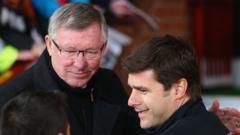
Pochettino’s respect for Ferguson dates back even further. In 2017, while managing Tottenham, he shared lunch with the former United manager and called him “the greatest manager in the history of football.” He said that spending two hours with Ferguson was an experience to “only enjoy.” This connection could be significant for United, a club that has struggled to find a manager who fits into its style and ethos since Ferguson’s retirement in 2013.
United’s managerial appointments since Ferguson have swung between European coaches with distinct tactical identities and former United players who represent Ferguson’s era. This has created an ongoing debate about whether the club should prioritise results or preserve the style and culture from its most successful period. Pochettino might offer a middle ground, combining tactical ideas with an understanding of the club’s heritage.
Michael Carrick’s brief tenure as caretaker manager last season demonstrated a style of play that relied heavily on quick transitions and counter-attacks, particularly when United had less than 50% possession. Under Carrick, the team lost just once in 13 matches where they were out-possessed, winning 62% of those games. However, when United held the majority of the ball, their win rate dropped to 36%. Carrick’s vision was to develop a side that could play slick, possession-based football, inspired by Paris Saint-Germain’s midfield trio, but this was only partially realised.
Pochettino’s approach could address some of these challenges. He describes his teams as needing “to be protagonists, always press high, work hard and be dynamic.” He refers to himself as a “disciple” of Marcelo Bielsa, the legendary Argentina coach he played under. Bielsa’s influence is notable in Pochettino’s emphasis on vertical football and high pressing, qualities visible in the style of other Bielsa-inspired coaches like Liverpool’s Andoni Iraola.
At the recent World Cup, Pochettino’s tactics with the United States team showed his adaptability. Rather than rigid positional play, only certain players held fixed positions. This fluid midfield movement created problems for zonal defending teams by exploiting spaces between defensive zones. The US players’ close proximity allowed for quick passing combinations that drew opponents out of position and opened up opportunities for speedy attackers like Folarin Balogun.
This mix of fluid midfield play, small-space passing, and direct through-balls echoes some of what Carrick was trying to implement at United. Pochettino described his philosophy as giving “a freer style with a good organisation,” suggesting he might bring more structure to the “freer” style Carrick aimed for but struggled to deliver consistently.
United fans have often accepted fast-paced, vertical football when it comes from a proactive approach, such as under Ferguson or Jurgen Klopp’s Liverpool, where teams keep possession but do not pass simply for the sake of it. In contrast, styles based on conceding possession and defending for long periods have been less popular.
Carrick’s early work with a 4-2-4 press showed promise and an intent to be proactive. Pochettino’s appointment raises questions about whether he can develop that vision into a more coherent and sustained style, combining his tactical principles with an understanding of United’s culture, inspired by Ferguson’s legacy.
The club’s official announcement confirmed Pochettino’s role beginning immediately, with the Argentine promising to bring his philosophy to Old Trafford while respecting the club’s history and expectations. United’s search for a manager who can deliver consistent success and reconnect with its identity enters a new phase with Pochettino at the helm.
According to BBC Sports.