Andy Haden’s dive in the closing moments of the 1978 Wales versus New Zealand match remains one of rugby’s most infamous acts of gamesmanship. With Wales leading 12-10 inside Cardiff’s Arms Park, Haden, the All Blacks lock, leapt out of the line-out in an attempt to win a penalty. Referee Roger Quittenton awarded the penalty, and Brian McKechnie’s kick secured a 13-12 win for New Zealand, sparking outrage and a long shadow over the fixture.
The incident was not a spontaneous decision. Haden later admitted in his autobiography that the All Blacks had planned the move the night before. “With Wales in front, I knew there could only be a minute or so left. I went to Frank Oliver, my locking partner… and told him the plan in four words: ‘I’m going to dive’.” Bobby Windsor, the Welsh hooker caught out by the dive, called it “the worst day of my career.” He added, “I knew straight away that it was a con job. When we found out later that they had planned it the night before, that really got to me. I’ll never forget that as long as I live.”
That game was as close as Wales came to beating New Zealand for decades. Since a 1953 victory, Wales struggled to overcome the All Blacks, a run that stretched beyond 70 years, despite the efforts of stars like Gareth Edwards, Barry John, JPR Williams, Jonathan Davies, Shane Williams, and Alun Wyn Jones. The rivalry between these two rugby nations has been marked by intense drama, controversy, and moments that have shaped the sport.
The 1978 match itself carried weight beyond the scoreboard. It was the first New Zealand visit to Cardiff since the 1972 Lions tour, which had ended in scandal after Keith Murdoch was sent home for punching a hotel doorman. Murdoch became a recluse in Australia until his death in 2018, but the memory of that night lingers among players and fans. The All Blacks still stop at the Angel Hotel on Westgate Street for a commemorative pint, underlining the lasting significance of that era.
Wales came agonisingly close again in 2004. New coach Mike Ruddock led a young Wales side that had shown promise during the 2003 World Cup in Australia, where they scored a record 37 points in defeat to New Zealand. Against the All Blacks in Cardiff, Wales led at halftime through tries from Tom Shanklin and Mefin Davies. The All Blacks responded with two solo tries from Joe Rokocoko, then one of the world’s most dangerous players. Stephen Jones’s late kick brought Wales within a point, but confusion over injury time cost them dearly. The stadium clock showed extra time, but the referee’s watch did not. Wales kicked away possession in the final seconds, unaware the game had ended.
Shanklin reflected on the loss, “It’s actually more painful and frustrating now, when I look back, than it was at the time. We had been through some tough years so I was actually quite pleased that we hadn’t been hammered and put on a great show. But looking back, you realise now just how close we came to making history.” That autumn campaign, he added, helped set the stage for Wales’s Grand Slam success the following year.
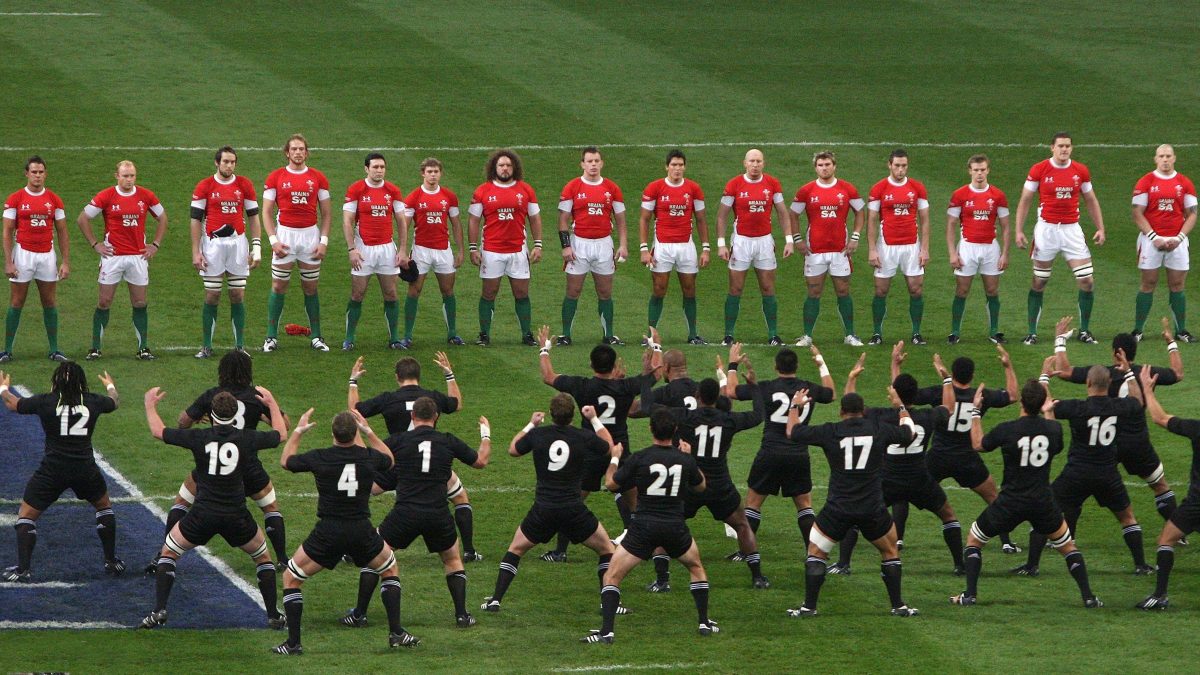
The contest between Wales and New Zealand has also included moments off the pitch. In 1905, Wales’s singing of Hen Wlad Fy Nhadau in response to the New Zealand Haka was the first instance of a national anthem sung before an international sporting event, a tradition now standard worldwide. The Welsh crowd’s reaction unsettled New Zealand’s captain Dave Gallaher, who noted he had never experienced anything like it.
Attempts to respond to the Haka in later years have caused tension. For the centenary of the fixture in 2005, the Welsh Rugby Union (WRU) requested to play their anthem after the Haka, a break from tradition agreed to by New Zealand as a one-off. The following year, when the WRU tried to repeat this, the All Blacks refused. The resulting standoff left 74,000 fans and the Welsh team watching a recording of the Haka on the stadium’s giant screens. Former Wales prop Adam Jones remembered the day, “For some reason the powers that be decided that it would be a good idea to try and convince the All Blacks to do their Haka before we responded with our national anthem. They put 40-odd points on us that day, and [then Harlequins team-mate] Nick Evans told me the incident ensured they wanted.”
These episodes illustrate the complex and often fraught history between two rugby nations that have rarely seen a Welsh victory since the mid-20th century. The combination of hard-fought matches, controversial moments, and cultural clashes has ensured every Wales-New Zealand encounter carries weight far beyond the final score.
According to Yahoo Sports.