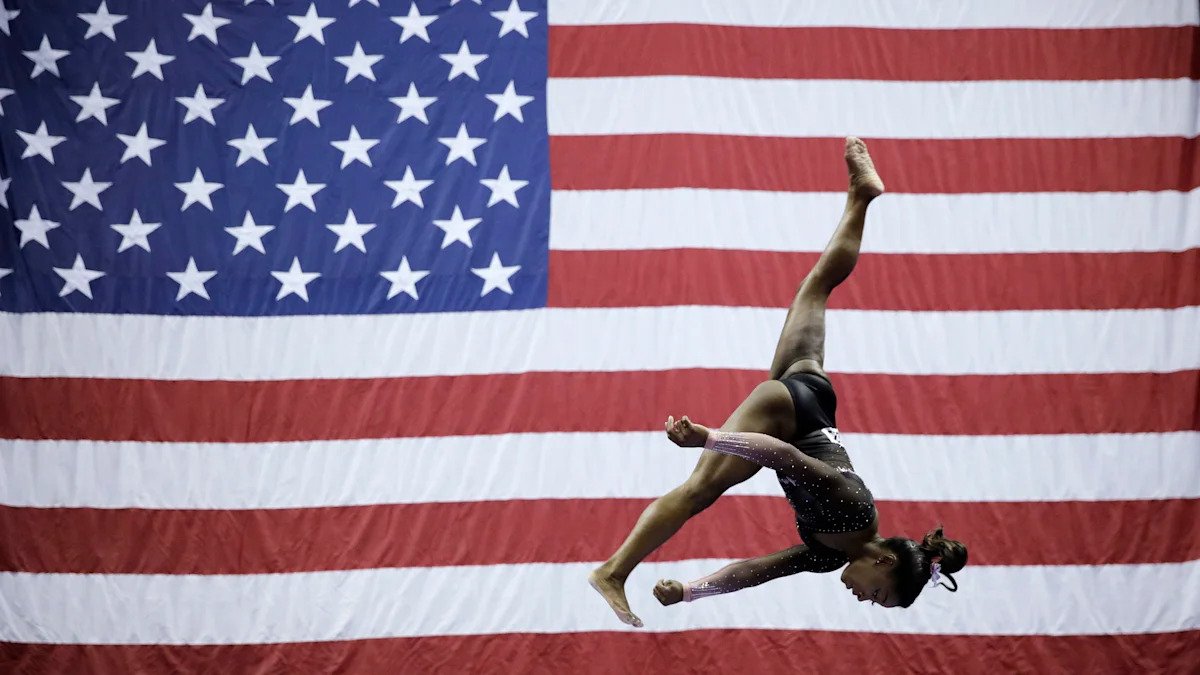
Women’s basketball is drawing record TV audiences this year as female participation in sports climbs to new heights in the United States, but the surge in interest comes amid heated debates over Title IX and ongoing challenges for women athletes.
Las Vegas Aces star A’ja Wilson, a five-time WNBA MVP, described the current enthusiasm around women’s basketball as “just the tip of the iceberg.” The WNBA finals attracted historic ratings, feeding momentum into the NCAA season and fueling investors to pour money into stadiums and facility upgrades for women’s sports at all levels.
This surge follows decades during which female athletes faced widespread barriers. Early 20th-century attitudes often discouraged girls from playing sports due to fears that physical exertion would harm their fertility or make them “overly aggressive,” according to historians Ashley Brown of the University of Wisconsin, Madison and Bonnie Morris of UC Berkeley. Women’s sports struggled for respect and visibility, with pioneers like Babe Didrikson Zaharias and Althea Gibson standing out amid persistent skepticism.
Before Title IX’s passage in 1972, opportunities for girls and women were scarce. In the 1971-72 school year, fewer than 300,000 girls played high school sports, compared to 3.7 million boys. Within six years, girls’ participation jumped to more than 2 million, reshaping the landscape of youth sports in America.
Former Olympic softball player and UCLA coach Lisa Fernandez credited those early advocates for the advances today’s athletes enjoy. “They endured some things that weren’t great. They pushed for us,” she said.
Despite these gains, progress remains uneven. Compliance with Title IX requirements still faces setbacks, especially regarding facilities and equipment. New York Liberty guard Sabrina Ionescu said, “I do think at some point the curve is going to work in the right direction. But as of now, I think it’s still a lot more negative than positives that young teams are seeing.”
Public interest in women’s sports has grown but remains lower than for men’s sports. An Associated Press-NORC Center for Public Affairs Research poll from last year found about 30% of U.S. adults follow women’s professional or college sports, compared to roughly 50% who follow men’s sports. Fans of women’s sports tend to be more casual, attending or watching games occasionally rather than frequently.
Athletes like Iowa basketball’s Caitlin Clark have helped boost visibility. Clark’s performances drove record television ratings for women’s college basketball and recently she joined the Indiana Fever, bringing her popularity to the WNBA. Meanwhile, the female athlete-founded apparel brand Togethxr responded to online disparagement about women’s sports with shirts proclaiming, “Everyone Watches Women’s Sports.” Celebrities such as Chelsea Handler and Jason Sudeikis have worn the brand.
The financial outlook for women’s sports has also improved. Deloitte projects global revenue will reach at least $3 billion this year, up from less than $1 billion in 2023.
Still, the rise in attention comes as Title IX faces intensified political attacks. Debates around the law’s scope and enforcement have created uncertainty about the future support for female athletes. The tension between growing popularity and legislative challenges leaves many wondering whether this moment will sustain.
Women’s sports have come far from Paul Gallico’s 1938 remark that female athletes were “at best second-rate imitations of the gentlemen.” Yet, the struggle over recognition and resources continues as the country watches an expansion of women’s sports alongside renewed scrutiny of the policies that made progress possible.
According to Yahoo Sports.