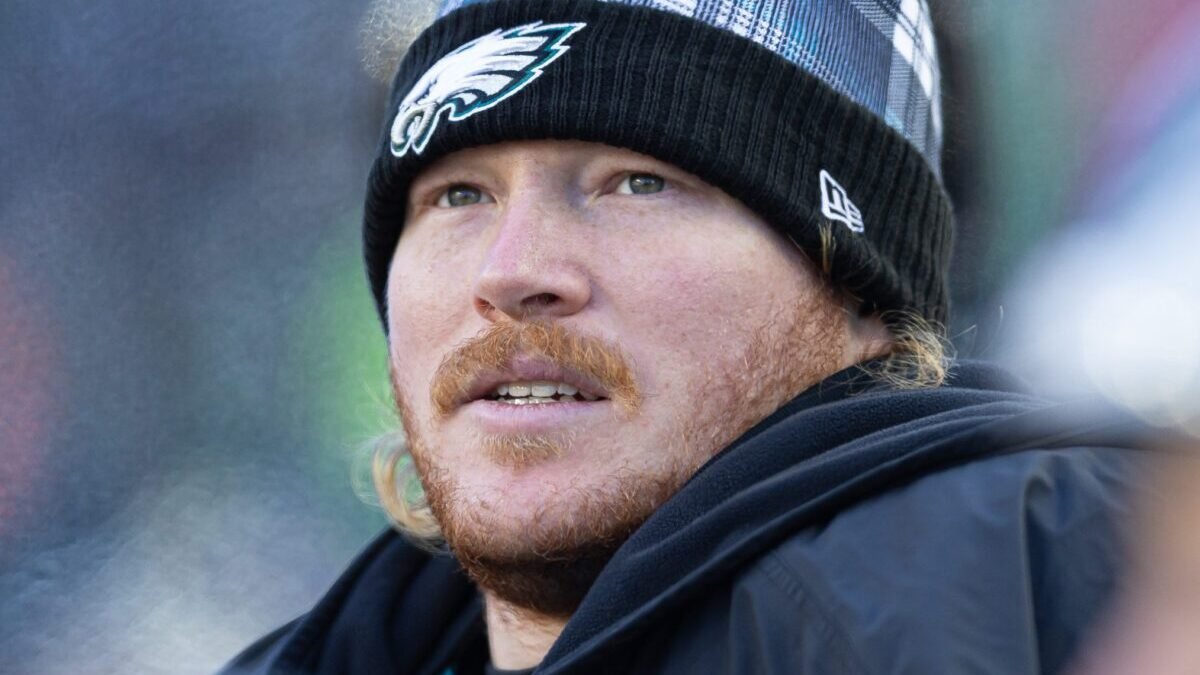
The Philadelphia Eagles have traded center Cam Jurgens to the Baltimore Ravens, receiving a 2027 fifth-round pick and a 2028 second-round pick in return. Despite Jurgens’ recently signed four-year, $68 million extension starting in April 2025, the trade is not expected to create major salary cap issues for the Eagles through 2028.
The deal came shortly after Lane Johnson announced his retirement, signaling a reshaping of the Eagles’ offensive line. With Jurgens gone, Drew Kendall has stepped into the center role, potentially solidifying his place on the line moving forward. The Eagles’ front office appears to be focusing on turning the ongoing offensive line transition into future draft capital rather than freeing up immediate cap space.
Eliot Shorr-Parks, a noted NFL salary cap analyst, addressed the financial impact of the trade on October 8, tweeting that the move “really [has] not much of an impact” on Philadelphia’s cap situation. Shorr-Parks emphasized that the dead cap space created by the trade “doesn’t matter to Eagles” and that the team has “a ton of space next year & enough space this year after the trade.” This suggests the Eagles can manage the financial implications without hindering their roster flexibility.
Before the trade, the Eagles held roughly $10.7 million in salary cap space for the 2026 season. Although trading Jurgens introduces some dead money, the Eagles still have enough room to maneuver through the remainder of the year. The bigger financial effect appears in 2027, when the Eagles are expected to carry a dead-money charge of approximately $14.9 million related to Jurgens.
While this figure sounds significant, it should be considered alongside the broader salary cap outlook for the Eagles. According to Over The Cap projections, Philadelphia was expected to have about $42.85 million in cap space in 2027 and nearly $79.6 million in 2028 before factoring in the Jurgens trade and other changes. The addition of future draft picks in the deal is a notable offset to the dead money cost.
The 2028 second-round pick adds a valuable asset for Howie Roseman and the Eagles’ management to use in building the roster. The 2027 fifth-round pick further expands the team’s options in an already active draft class. These picks can be used directly in the draft or traded later if new roster needs arise.
The timing of the trade aligns with a clear shift in the Eagles’ offensive line personnel. With Johnson’s retirement and Jurgens’ departure, the team is transitioning to a new setup, with Kendall taking on more responsibility at center. The trade reflects a strategic choice to prioritize future draft capital amid this reshaping rather than immediate salary cap relief.
Jurgens’ contract extension, signed in April 2025, was a major financial commitment by the Eagles. Yet the team’s handling of the trade shows confidence in its ability to absorb dead money without significant disruption. Shorr-Parks’ analysis reinforces that the Eagles’ salary cap situation remains manageable despite the move.
The Eagles have not announced any immediate roster moves to replace Jurgens beyond Kendall’s promotion. The focus for now appears to be on integrating the draft picks acquired and adjusting the offensive line configuration for the upcoming seasons.
According to Yahoo Sports.