
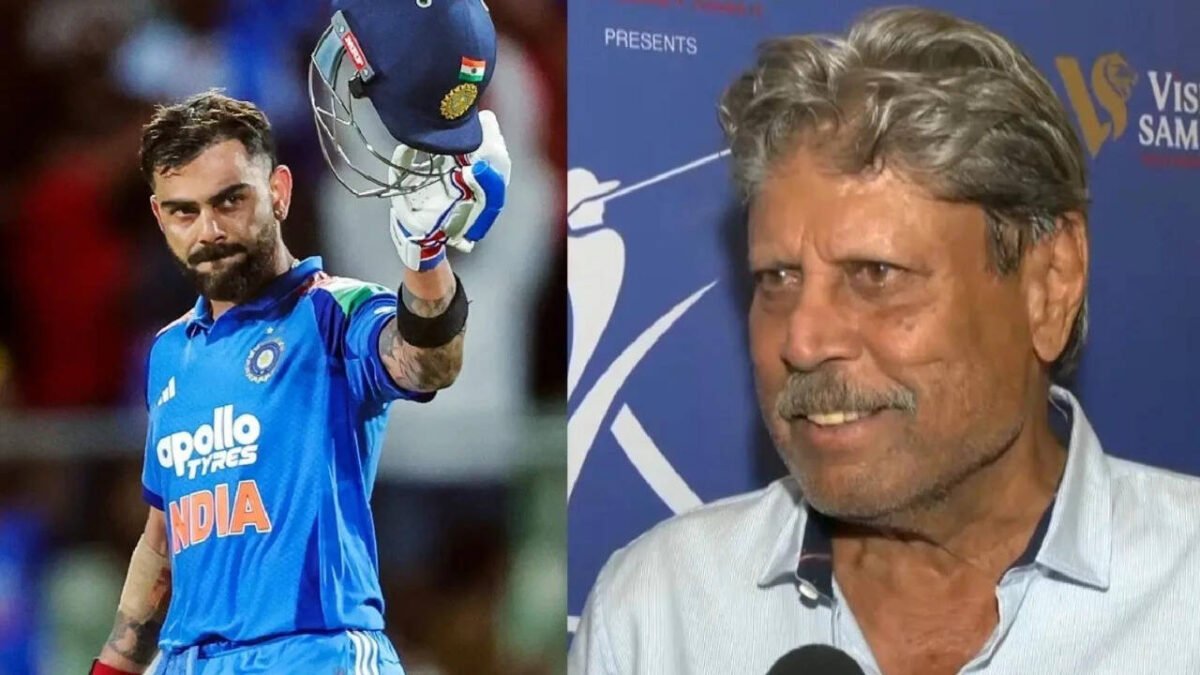
Kapil Dev sat on the clubhouse green at the Jaypee Greens Golf & Spa Resort, watching the last groups finish a tournament that now bears his name. The former India Test captain and 1983 World Cup winner has taken on the presidency of the Professional Golf Tour of India (PGTI), a role he described as slipping on “like the proverbial glove.” Though the tournament is officially called the President Cup rather than the Kapil Dev Invitational, the association with his name signals his growing influence beyond cricket.
“I feel very happy,” Kapil said, reflecting on his new position. “If we can do something for golf. I love to do work for cricket but if they don’t invite me, I have to do something. So I feel very happy to do it for golf.”
Kapil was clear in distancing his brief stint as India’s cricket coach from a full coaching career. “You can’t say coach. If I give you a job for 10 days, you can’t become a coach. I was not working even six months (as coach). I wouldn’t consider that a coaching assignment.”
His interest in golf dates back to his playing days, though he did not take it up seriously then. “Had I played golf then, it would have helped with concentration,” he said. “One bad shot can get you out in cricket too, but here your target is small.” He noted that many current cricketers have become serious golfers, but he advised them to “just go and enjoy yourself” rather than approach golf professionally. “You need eight to 10 hours (daily) workload. Golf is very, very tough.”
Kapil also weighed in on the challenges of modern cricket, particularly around workload management and injuries. Despite never being injured during his playing career, he acknowledged he could not fully judge the current situation. “Only those who are playing can.” On Hardik Pandya’s availability, he said bluntly, “Play more cricket.” He explained that playing more regularly helps condition the body and reduce injuries, as sudden increases in workload can cause problems.
Addressing the volume of cricket today, Kapil recalled a comment from Sandeep Patil: “In our time we used to play Ranji Trophy, Duleep Trophy, club cricket, other cricket too. In 365 days, if you can play 250 days, you’re in the game.”
Asked if he watches more golf or cricket now, Kapil admitted he rarely watches cricket live, preferring to catch highlights or moments of special significance. He observed that cricket has changed, particularly with equipment and opportunities for players. “The bats have changed. These young boys are very confident, much better. They get a lot more opportunities. In our time, if you’re out of the team, you have to play Ranji Trophy, Duleep Trophy. The opportunities these cricketers have is a lot.”
He praised the board’s approach to players returning to form, citing Bhuvneshwar Kumar as an example. “He’s come back after four years because he played in the IPL, performed and bounced back. But here, more credit to Bhuvi than anybody else. Because in a cricketing sense, they really write you off very fast. But he kept on working with the opportunities that he got.”
Kapil shifted to golf’s current challenges. Despite more sponsorships, India hasn’t seen an international win in golf for some time. “If you don’t give the golfers infrastructure, how will they improve? All top golfers, they still can’t walk in to play in any golf course. Give them a better place to practise and play. Then it’s a different thing altogether.”
He highlighted the financial barriers for top Indian golfers. “Today, if you tell a top golfer to go play, they have to pay wherever they have to play, even at this course. As administrators, we feel very sorry for this limitation. The top 40 or 50 pros in this country should be able to walk in to play at any of the golf courses.”
When asked about the next generation of cricketers, Kapil said he looks for players who could carry the game for 10 to 15 years. “We have seen Rohit, Virat. We already saw Sachin. And they made us so proud. You’re always looking for the next hero. You always ask, ‘Who is the next hero?’”
On prospect Vaibhav Sooryavanshi, Kapil was cautious. “It’s too early. Does he have the ability? Yes. But there have been so many in cricket who came with so much ability, then faded out.” He pointed to the importance of lifestyle and mindset changes over the coming years before judging a young player’s future.
Kapil praised Jasprit Bumrah’s success despite an unconventional bowling action. “He’s fabulous. Hats off to him. With that action, he’s proved people like us wrong. We never thought he could survive with that action and bowl so well and become world leading bowler. Tremendous.”
On Vinod Kambli’s struggles, Kapil said, “Everybody can help him, only if he helps himself. I don’t believe in giving him money. I would rather pay his hospital expenses or rehab expenses. Why has he reached this situation? Kambli has himself to blame.”
Kapil’s new role as PGTI president places him at the centre of Indian golf’s ambitions while his reflections on cricket reveal a nuanced view of the game’s evolving demands and the pressures on its stars. His presidency will continue to be watched closely as he works to build infrastructure and support for Indian golf professionals.
According to Yahoo Sports.