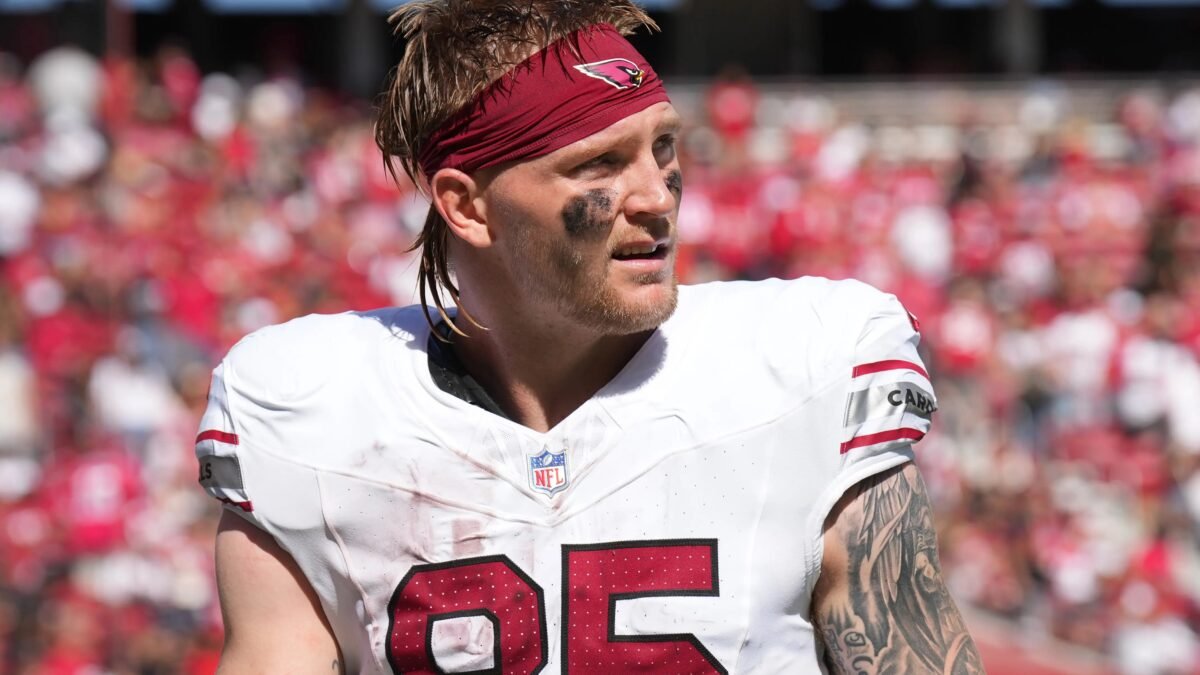
An NFL official appeared to direct profanity at Arizona Cardinals tight end Trey McBride during Sunday’s game against the New York Giants, prompting a call for accountability from the NFL Players Association. The incident, captured by television cameras, showed line judge Jeff Seeman seemingly telling McBride “F— you” twice after McBride disputed a no-call on what he believed was defensive pass interference by Giants cornerback Dru Phillips. McBride’s reaction—smiling, pointing toward the camera, and laughing—amplified the moment, which quickly went viral on social media.
There was no field microphone recording the exchange, so the exact words remain unconfirmed. However, the visual evidence sparked a sharp response from NFLPA executive director JC Tretter. Speaking to Football Night in America, Tretter said, “This kind of behavior from an official towards a player is unacceptable.” He stressed the inconsistency in how accountability is enforced in the league, pointing out that “players are consistently held accountable when the roles are reversed. We expect the NFL to hold officials to the same standard.”
The incident occurred during Arizona’s 36-24 loss to the Giants, but Tretter’s comments put the spotlight on a broader issue. Players and coaches face immediate penalties for showing disrespect toward officials. For example, on the same Sunday, Patriots head coach Mike Vrabel was hit with a 15-yard unsportsmanlike conduct penalty after he told a referee the call against his team was a “f—ing terrible call.” Vrabel later admitted he should have handled the situation better, though he also joked that the official was “a little sensitive.”
The contrast between Vrabel’s penalty and the lack of immediate consequences for Seeman’s alleged conduct illustrates the dilemma Tretter raised. Coaches and players lose yards or face other sanctions immediately for crossing the line, yet officials appear to operate without a similar in-game mechanism for accountability. This inconsistency has sparked debate about the standards officials are held to during games.
The NFL has acknowledged the issue. A spokesperson told Pro Football Talk that the league will review the interaction between Seeman and McBride. The review aims to establish exactly what was said and determine whether disciplinary action is warranted. Officials hold significant authority on the field—they throw flags, assess penalties, and influence game outcomes—making their conduct subject to scrutiny.
While emotions frequently run high during NFL games, and players, coaches, and officials often exchange heated words, the league expects officials to maintain control and professionalism. Tretter’s position reflects a growing demand for equal standards. “Officials deserve protection from abuse while performing an incredibly difficult job. They also have a responsibility to maintain control during confrontations,” he said.
The NFL’s investigation into the exchange will be closely watched by players, coaches, and fans alike. The league must decide whether Seeman’s behavior, if confirmed, breaches the expected code of conduct and what measures should follow. Addressing this could clarify whether officials face the same accountability as those they oversee.
For now, the incident remains under review, with no official disciplinary decisions made public. Meanwhile, McBride’s unusual reaction and the NFLPA’s prompt response have brought renewed attention to the dynamics between players and officials on the field.
According to Yahoo Sports.