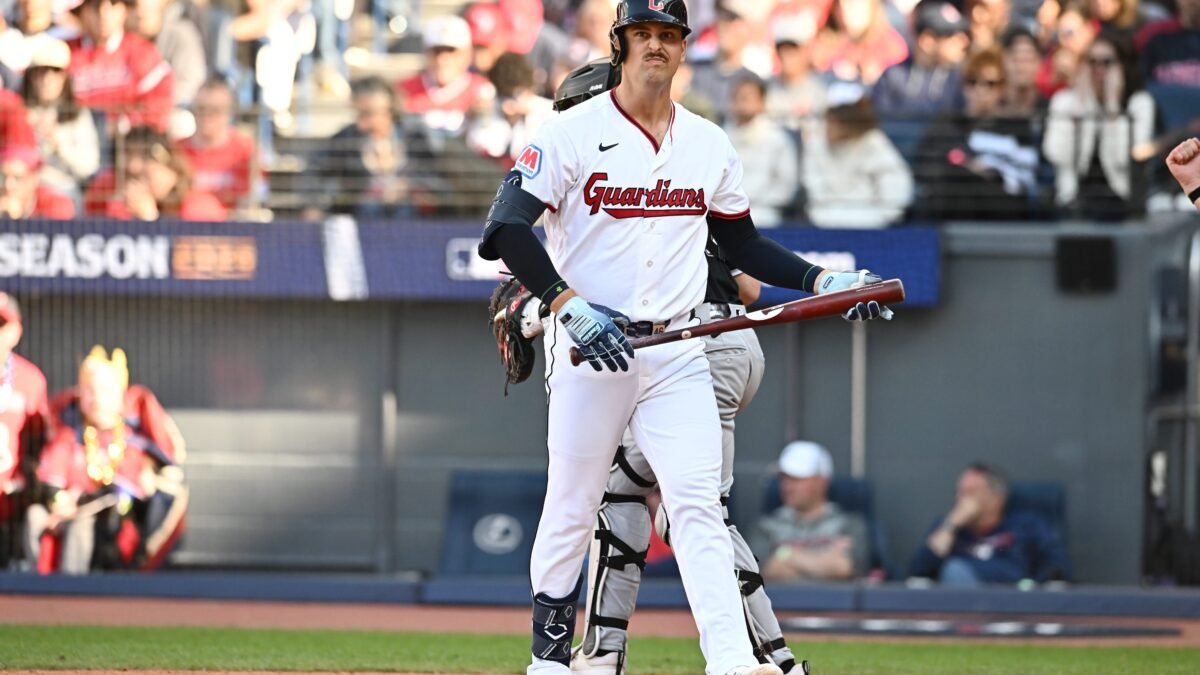
The Chicago White Sox’s pitching approach left the Cleveland Guardians searching for answers in a 3-0 shutout loss during Game 1 of the ALDS at Progressive Field on October 3. Chicago’s use of multiple pitchers in quick succession disrupted Cleveland’s hitters, who struggled to adjust to the constant changes on the mound.
The Guardians faced a barrage of arms from the White Sox bullpen, starting with left-hander Hagen Smith, who threw 2⅔ innings without allowing a hit despite walking three and striking out four. Grant Taylor then took over for the final four innings, delivering six strikeouts on just two hits and no walks. Chicago also used three relievers to cover the middle innings, leaving Cleveland’s lineup unable to settle into any rhythm.
“You’re getting different looks out there to make it tough, and we’ve got to adjust and find a way to do it,” said Guardians outfielder Jo Adell, who went 0-for-4 with four strikeouts in his first postseason game. Adell, batting fourth in the order, described the White Sox pitching as a “blender,” underscoring the difficulty Cleveland faced in identifying a consistent pattern.
Chicago’s pitching strategy involves shorter starts and a rotation of multiple pitchers to prevent hitters from getting comfortable. It’s a variation on the “pitching chaos” concept seen with the Detroit Tigers, but the White Sox hybrid approach leans on slightly longer openers and a deep bullpen. Their left-handed heavy lineup complements this, helping them maintain pressure on Cleveland’s hitters.
Nate Lowe, who pinch-hit and went 1-for-2 with a double and a walk, said the Guardians also contributed to their offensive struggles. “I don’t think our swing decisions were great. We lost a lot of count leverage. But it’s a simple area for us to tighten up on, whether there’s a right-handed or left-handed pitcher out there,” he said.
Despite loading the bases twice thanks to White Sox pitchers’ control issues, the Guardians couldn’t capitalize. Austin Hedges noted the challenge of getting hits against top-tier pitching. “It’s always hard to get a hit. Big-league pitchers are really, really good… We created the opportunities, and we just didn’t get the big hit,” he said.
White Sox manager Will Venable confirmed pitcher Sean Burke will have a role in Game 2, though the team has not decided on a starter. Burke pitched four innings in Game 2 of the AL Wild Card Series in Houston. The White Sox’s use of multiple pitchers in Game 1 suggests Cleveland’s batters may never face the same pitcher three times in a row across the series.
The schedule favors Chicago, with off days before and after Monday’s Game 2 at Progressive Field. These breaks allow teams to be aggressive in pitching changes. The White Sox, holding a 1-0 lead, benefit from the off day before Game 3 in Chicago, giving them more options in managing their bullpen.
Cleveland’s offensive struggles in Game 1 echo a season-long concern. The Guardians improved their hitting in August and September, posting their two best months by OPS, which raised hopes entering the ALDS after five days of rest. Still, the lineup failed to produce when it mattered most against Chicago’s varied pitching approach.
The second game, scheduled for 5 p.m. Monday, October 5, looms as a must-win for Cleveland if they want to avoid an early exit from the 2026 playoffs. The Guardians have until then to find a way past the White Sox’s disruptive pitching tactics.
According to Yahoo Sports.