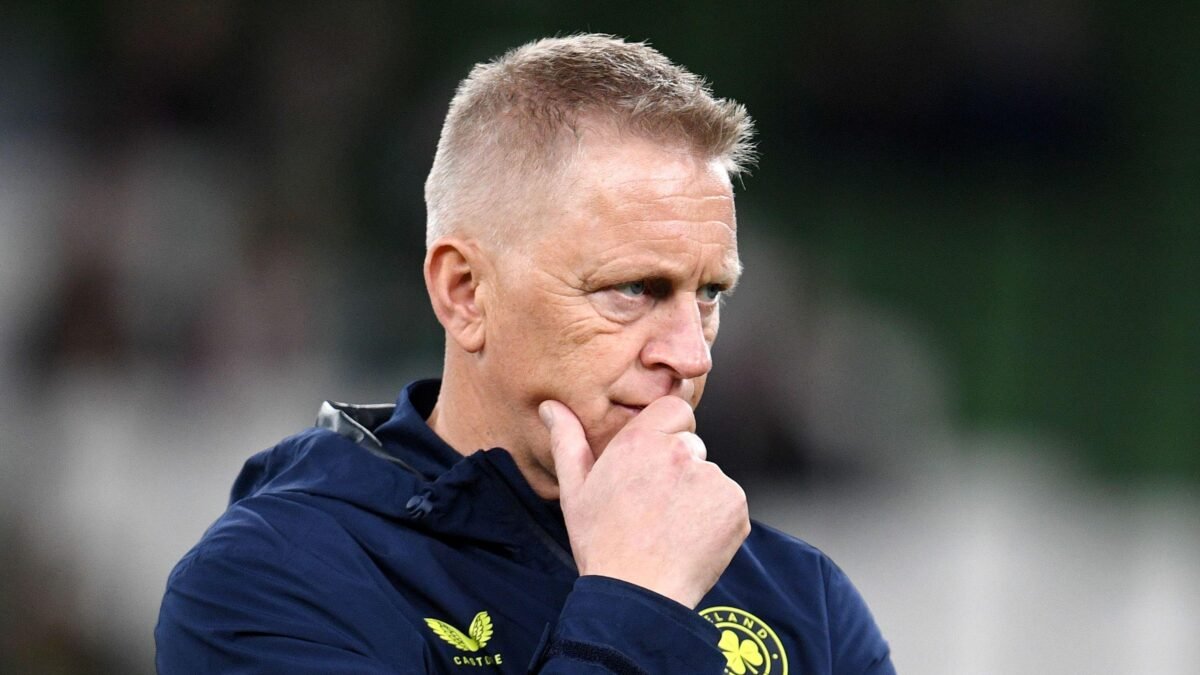
Republic of Ireland coach Heimir Hallgrimsson has warned that Sunday’s Nations League game against Israel will be tense and challenging after provocative remarks from the Israeli captain Manor Solomon. The match, moved to the Serbian town of Backa Topola and to be played behind closed doors, follows a period of controversy and unrest surrounding the fixtures amid the ongoing Israel-Gaza conflict.
The Republic of Ireland secured a 3-0 win over Israel in their first meeting in Debrecen, Hungary, but the encounter was overshadowed by political tensions. The Irish team refused to engage in pre-match formalities and bowed their heads during the Israeli national anthem. After the game, Solomon said Israel is "a country 10 times better than theirs" and stated, "Obviously they hate us. We don't like them." These comments prompted Hallgrimsson to acknowledge that the upcoming fixture “is not going to be a friendly.”
Hallgrimsson told reporters after Thursday’s 2-2 draw with Austria in Dublin that “it is going to be tricky and challenging for the players to be ready” for the match against Israel. He also revealed the squad had been affected by the off-field distractions. “Fatigue because of everything going on was a factor on Thursday as Austria fought back following Troy Parrott’s first-half double,” he said. The coach assured that the medical team would work “day and night to get them fit and fresh for that game,” stressing that “there is more at stake for all of us.”
The Israel fixtures have dominated this international window in Ireland. The 'Stop The Game' campaign, organised by Irish Sport for Palestine, called for the Republic of Ireland to withdraw from the matches. Protests outside the Aviva Stadium ahead of the Austria game were loud and interruptive, including a tennis ball protest and a pitch invader during the match. Hallgrimsson admitted he was uncertain what to expect from the crowd before the Austria game but felt encouraged by the support they received.
“Yeah, I'm not going to lie. I didn't know what to expect,” Hallgrimsson said. “Obviously, the 'Stop the Game' protest is loud. I don't know how many but it's been loud, but it was just good to see the support from the fans and I just want to repeat the appreciation for people showing up and showing support tonight, it helps us a lot. It gives us even more pride to play for the country.”
The political backdrop has had an impact on team selection as well. Republic of Ireland goalkeeper Gavin Bazunu made himself unavailable for both Israel matches, saying he felt “it would be wrong to participate.” Despite this, the players voted by a “significant majority” to continue with the fixtures, according to Football Association of Ireland chief executive David Courell.
Hallgrimsson was asked if the backing at the Austria game would help the players heading into the second Israel match. “I don't know, you'll have to ask them,” he said. “I hope so. I hope we all feel more appreciated than probably before this match. If that answers the question, I think we feel more appreciated.”
Sunday’s game is designated as Ireland’s home fixture but has been relocated to TSC Arena in Backa Topola, a town around 100 miles north of Belgrade, Serbia’s capital. Hallgrimsson said he knew “absolutely nothing” about the town and described the entire four-game international window as “strange and challenging and testing.” He added the contrast between playing in front of 45,000 or 50,000 supporters and then in an empty stadium “is just another angle of the story and we need to be ready for that one.”
The match will be played under unusual circumstances, with no fans in attendance and tensions heightened after Israel captain Manor Solomon’s remarks. Hallgrimsson’s squad faces a test both on and off the pitch as they prepare for what promises to be a difficult encounter.
According to Yahoo Sports.