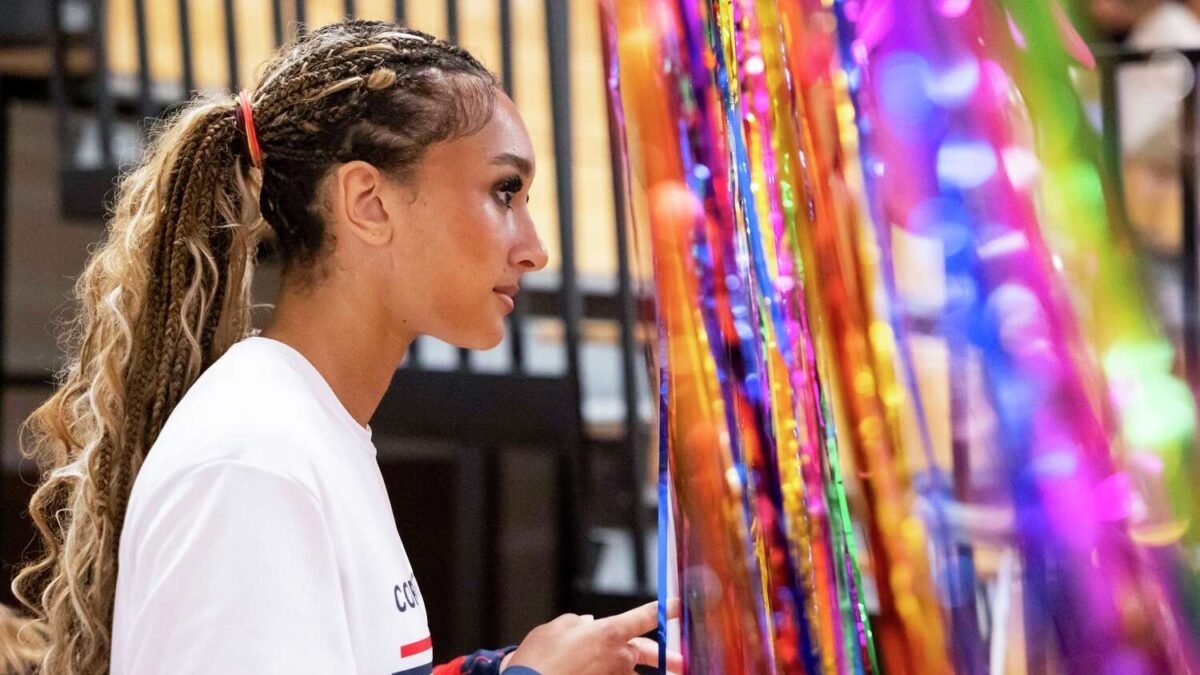
Sydney Whisenton, a junior setter at Cornerstone, has overcome a rare and painful arterial condition to become one of the nation’s top volleyball recruits. Diagnosed with arterial Thoracic Outlet Syndrome (aTOS) during her freshman year, Whisenton underwent two complex surgeries to remove a cervical rib and several blood clots, a process that threatened her playing future but ultimately did not derail her rise.
The 5-foot-9 athlete has been integral to Cornerstone’s national standing, with the Warriors holding a 27-4 record and ranked No. 3 by MaxPreps and No. 7 by Prep Volleyball. Whisenton has amassed 453 assists, 172 kills, 179 digs, and 60 aces this season, statistics that underline her versatility and skill. Teammates like junior outside hitter Claire Bolton describe her as a "powerhouse," noting that her hitting ability belies her stature. Meanwhile, junior libero Sara Gonzales highlighted her command over the team’s offense, saying, "She runs the offense like no other."
Whisenton’s journey to this point has not been straightforward. She first noticed symptoms in middle school—discoloration, pain, and numbness in her fingertips—that were initially attributed to Raynaud’s disease. For years, she managed these symptoms with hand warmers during matches. But in January 2025, during a club tournament in Round Rock, Texas, her arm gave out entirely while serving, accompanied by excruciating pain and loss of finger movement. It was a turning point that prompted her family to push for more thorough testing.
Jamey Howard, an athletic trainer at Cornerstone, recommended she be tested for arterial Thoracic Outlet Syndrome, a condition where an artery is compressed, reducing blood flow. Testing revealed not only aTOS but also the presence of a cervical rib, an extra rib above the collarbone found in less than 1% of people. The repetitive swinging motion required in volleyball caused the rib to press against her artery, leading to two blood clots in her right arm.
Within a week of diagnosis, Whisenton underwent two surgeries. The first, on March 4, 2025, lasted six hours to remove the clots. Two days later, she had an eight-hour procedure to remove the cervical rib, first rib, and anterior scalene muscle to relieve pressure on the artery. Her teammate Gonzales described the surgeries as "very complex" and recalled the worry she felt visiting Whisenton in the hospital.
Her parents faced uncertainty about her future in volleyball. Whisenton’s mother, Ginger, said they awaited the doctors’ advice on whether she could return to play. "She was likely going to get a scholarship and do well in the sport," Ginger said. "We didn’t want to take that away from her." Her father, Cecil, admitted the situation was frightening, especially given how long the condition remained undiagnosed. "When the doctor said we have to do surgery immediately, that was kind of scary. But, we're people of faith," he said.
Sydney herself worried about how the surgeries might affect her mechanics and performance. "I was scared, not for the surgery, but for the result," she said. "I was scared that my surgery was not going to be the same. My hitting mechanic was going to be thrown off."
Despite these fears, Whisenton has recovered and continued to excel. She plays for both Cornerstone and the Alamo Volleyball Association club team. Her vision and accuracy as a setter have been central to the Warriors’ success this season. Her teammates express confidence in her leadership on the court, noting the comfort it brings to their play.
Cornerstone’s current national rankings reflect the impact of Whisenton’s return to form, and she remains committed to Baylor University for her collegiate career. The latest reports from the team’s gym on August 25, 2026, show her smiling and fully engaged in the game, a testament to her resilience and determination.
According to Yahoo Sports.